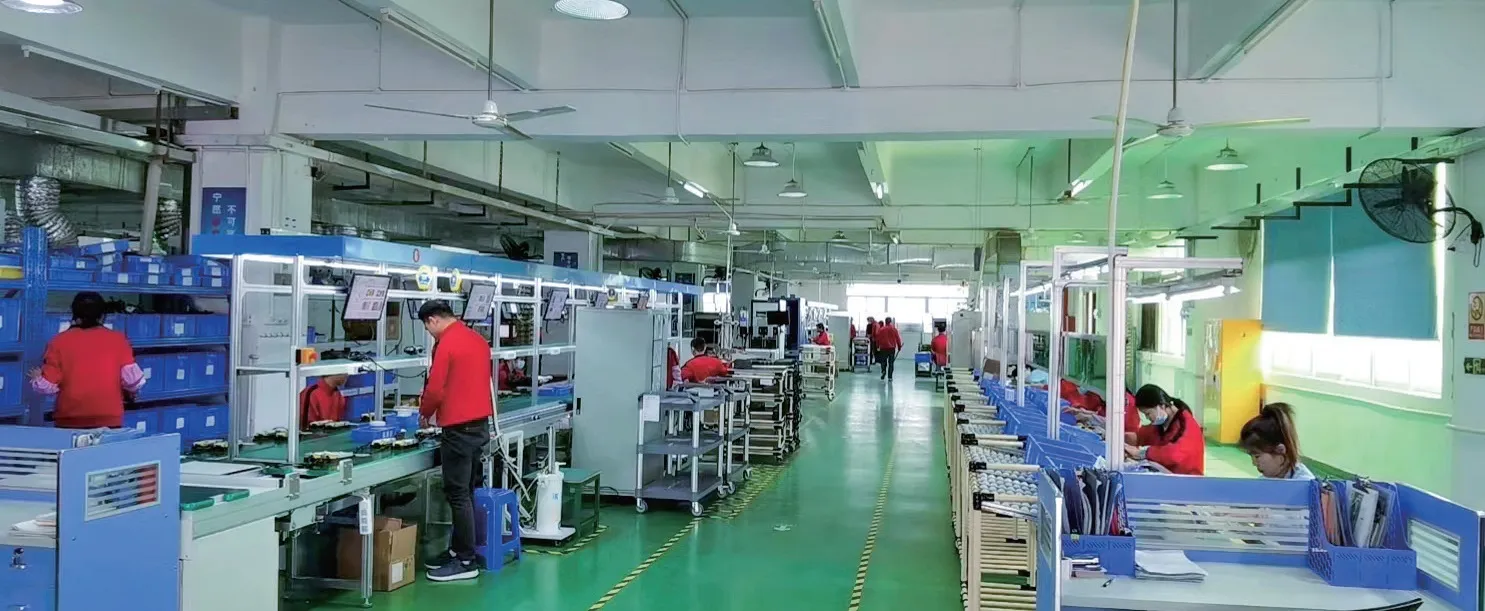
Building a Charger Into Your Product
When the battery charger is part of your product—not just a separate accessory—you need a manufacturing partner, not a catalog. OEM means we build to your brand and spec; ODM means we also contribute the design. For B2B battery-powered equipment, the charger is a reliability and certification choke point, so choosing the right development model early protects your launch date. This guide explains how OEM/ODM charger programs work and what to prepare before the first sample.
If you have not finalized the electrical spec, start with our lithium charger specification guide and the charger selection guide.
OEM vs ODM: What You Hand Off
- OEM: you supply the design, housing, and firmware intent; we manufacture to your print under your brand. Best when your team owns the engineering.
- ODM: we design the charger around your battery and envelope, then build it branded as yours. Best when you need charger expertise fast.
Both end at the same place: a charger with your label, your connector, and your behavior.
What to Prepare Before Contact
A smooth program starts with a short brief:
- Battery nominal and full-charge voltage
- Chemistry and required charging profile (CC-CV for lithium)
- Charge current and acceptable recharge window
- Input range (global 90–264VAC or regional)
- Mechanical envelope, mounting, and cooling constraint
- Connector type and pinout (see our connector types reference)
- Required certifications (CE, UL, etc.) for target markets
Send this through the contact page and we return a feasibility response quickly.
The Development Path
A typical engagement runs in stages:
- Spec confirmation: we review your battery datasheet and flag risks (e.g., a C-rate the BMS will not allow).
- Prototype: a functional sample in a provisional housing for bench and field trial.
- Design freeze: housing, firmware, and labels locked; certifications submitted.
- Mass production: stable process with incoming and final test.
For high-volume fleets, the same logic applies at scale—see our forklift charger guide for duty-cycle thinking.
Firmware and Communication
Embedded chargers often need to talk to your system. We support passive profiles and active protocols (CANbus, RS485, PWM) so the charger coordinates with your BMS or controller. Define the protocol in the brief; retrofitting communication late is costly.
Certifications and Market Access
Your charger carries your brand, so its certifications are your liability. We build to CE, UL/ETL, and relevant EMC and safety standards, and keep records for audit. Confirm the exact marks per market before tooling—adding a certification after production means a re-run.
Branding and Documentation
OEM/ODM includes your logo, model label, and user documentation in your language set. We can localize manuals and markings for multi-region launches, which matters if you sell through distributors.
Quality and Traceability
Industrial buyers expect traceability. We apply batch tracking and burn-in where required, and retain test records. For mission-critical equipment, ask about extended test coverage in the brief.
Cost Drivers and Volume
Custom charger cost is driven by a few levers: certification scope, housing tooling, communication firmware, and volume. Certifications to multiple markets add test and documentation cost but are unavoidable for compliance. A new housing mold is a one-time expense amortized over the run; using an existing platform housing avoids it. Active communication firmware costs more than a passive profile but may be required by your BMS.
Volume is the biggest lever. Above a threshold, per-unit cost drops sharply because tooling and setup are fixed. Share a realistic forecast in your brief through the contact page; we will recommend the cheapest path that still meets your spec, rather than over-engineering a low-volume build.
Frequently Asked Questions
How long does a custom charger take?
A straightforward OEM from existing platform usually samples in weeks; a full ODM with new housing and certifications can run several months including compliance. Early briefs shorten this.
Can you match our existing connector?
Usually yes, if you provide the connector type and pinout. Our connector reference helps confirm it.
Do you support lithium and lead-acid in one unit?
A single hardware platform can often support both via selectable profiles, but the unit must be explicitly rated for each. Tell us both in the brief.
What are the minimum volumes for OEM/ODM?
It depends on the customization. Send your forecast through the contact page; we will propose the most cost-effective path for your volume.
Can you localize the manual for my markets?
Yes. OEM/ODM includes user documentation and labels in your required languages, which helps distributors and end users and supports multi-region launches without a second supplier.
Next Steps
Treat the charger as a designed component, not a commodity. Prepare the seven-point brief above and reach our engineering team via the contact page. We will confirm feasibility, propose OEM or ODM, and move to prototype—so your product launches with a charger that is safe, certified, and unmistakably yours.