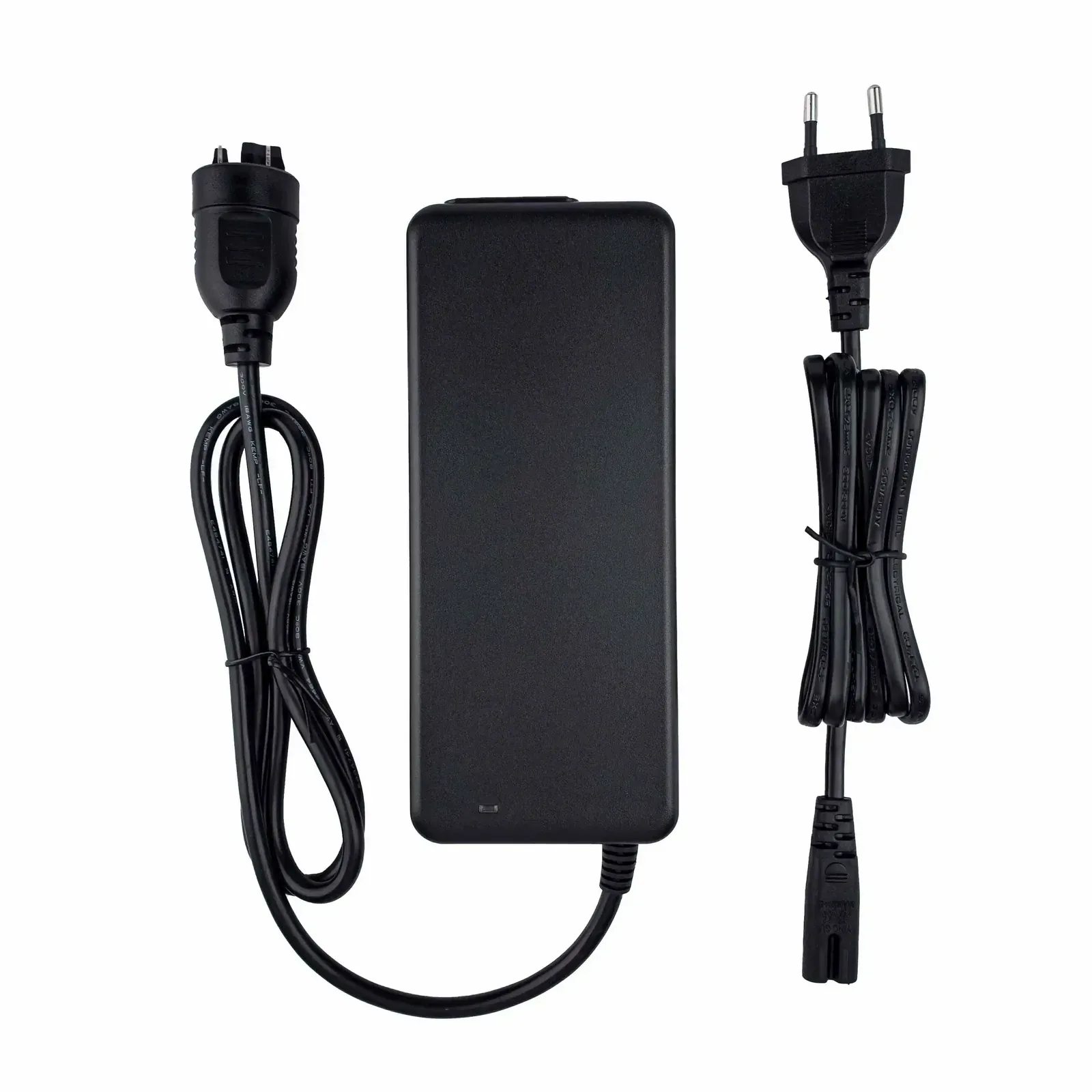
Why Charger Selection Matters More Than the Battery
A battery is only as reliable as the charger feeding it. The wrong charger shortens battery life, trips protection circuits, or worse, creates a thermal event. Yet most buyers pick a charger by price and amperage alone. A correct selection matches voltage, chemistry, connector, and the duty cycle of the application. This guide walks through each decision so you can specify a charger that is safe, efficient, and long-lived.
If you are building a B2B product around a battery system, the charger is part of your bill of materials. Getting it wrong means field returns and warranty claims. If you operate fleets, the right charger reduces downtime. Either way, the few minutes spent here pay back quickly. For lithium specifics, see our lithium battery charger specification guide.
Match the Nominal Voltage First
The single non-negotiable rule: the charger output voltage must match the battery pack nominal voltage. A 12V battery needs a 12V charger, a 24V pack needs a 24V charger, and so on. Chargers are not universal.
Why "nominal" and not "fully charged"
A 12V lead-acid battery reads about 12.7V at rest and 14.4V when full. A lithium 12V pack rests near 13.2V and reaches 14.6V at full charge. The charger is engineered for the chemistry's absorption and float targets, not the resting number. Never assume a 12V lithium pack can use a 12V lead-acid charger even though both say "12V"—the termination voltage differs.
Understand Battery Chemistry
Chemistry dictates the charging profile. The two dominant types are lead-acid (flooded, AGM, gel) and lithium (LiFePO4 most common in industry).
- Lead-acid uses a bulk/absorption/float profile and tolerates some overcharge, but gassing and water loss occur if float is wrong.
- LiFePO4 uses a precise CC-CV (constant current, constant voltage) profile with a strict top-voltage cutoff and communicates with a BMS.
- NiCd/NiMH are rare in industrial power but use a different delta-V termination.
Using a lead-acid profile on lithium can overcharge and damage cells. Using a lithium profile on lead-acid undercharges and sulfates plates. Match the profile to chemistry. Our connector compatibility guide explains why the plug is only half the story.
Size the Amperage to Your Recharge Window
Amperage sets how fast the battery refills. A simple rule: charge at 10–25% of battery capacity (Ah). A 100Ah battery is happy at 10–25A. Faster is possible but generates heat and stresses cells.
Charge time estimate
Divide capacity by charger amps, then add ~20% for efficiency losses. A 100Ah pack on a 20A charger refills in roughly 6 hours. If you need a one-hour turnaround, you need a 1C charger (100A) and a battery rated for it. Forklift operations often need fast opportunity charging—see our forklift voltage guide for duty-cycle planning.
Check the Connector and Form Factor
The connector must physically and electrically match the battery. Common industrial connectors include Anderson SB series, XLR, and proprietary fleet plugs. A mismatch means an adapter, a rewire, or a dead device.
Ask for the pin definition
Before ordering, photograph the battery connector and note the pinout. Many support requests stall because the pin definition is unknown. We publish a connector types reference to help you identify what you have.
Decide Between Off-the-Shelf and Custom
If your volume is low or your spec is standard, a catalog charger is fastest. If you are embedding the charger in a product, you likely need a custom or private-label unit with your housing, connector, and firmware. That is where OEM/ODM charger development comes in.
Validation and Safety Certifications
For market access you will need the right marks: CE for Europe, UL for North America, and relevant EMC and safety standards. Confirm the charger carries the certifications your market requires before qualification. A charger without the right mark is a liability, not a saving.
Frequently Asked Questions
Can I use a car battery charger for my lithium pack?
No. Automotive chargers target lead-acid absorption/float curves. Lithium needs a CC-CV profile with a precise cutoff. Use a charger explicitly rated for LiFePO4.
What happens if the amperage is too high?
The BMS will usually cap current, but heat rises and cycle life drops. Stay within the battery maker's recommended charge rate (commonly 0.2C–0.5C for LiFePO4).
Do I need a charger for each battery, or can I share?
You can share a charger across same-voltage, same-chemistry packs if duty cycles allow. Never share one charger across different voltages or chemistries.
How do I know the right connector?
Photograph it and match against our connector reference, or send the photo to our engineering team via the contact page.
Next Steps
Choosing well comes down to four facts: voltage, chemistry, amps, and connector. Write them down before you buy. If your application is unusual—high vibration, wide temperature, or embedded product—talk to our engineers early. Reach out through the contact page with your battery spec and we will recommend a configuration.