The Connector Is Half the Charger
Two chargers with identical voltage and current can still be useless to each other if the connectors do not match. The plug is the physical contract between charger and battery: it must carry the full current safely, key correctly so polarity cannot reverse, and survive the duty cycle. This guide surveys the common battery charger connector types, how to identify them, and what to tell your supplier so you get a working match the first time.
Connectors are only one part of compatibility—the electrical profile matters too. Review our battery charger selection guide for the voltage and chemistry side.
Anderson Connectors (SB Series)
Anderson SB connectors are the workhorse of industrial power. They are genderless, color-coded by current rating, and keyed so mismatched sizes cannot mate.
- SB50: up to ~50A, common on smaller mobility and 24V/36V equipment
- SB120 / SB175: 80–175A, typical for 48V forklifts
- SB350: 350A, heavy traction and 80V industrial trucks
The housing color indicates the series, not the voltage. Always match the series to your current. For forklift use, see our forklift voltage guide.
XLR (Cannon) Connectors
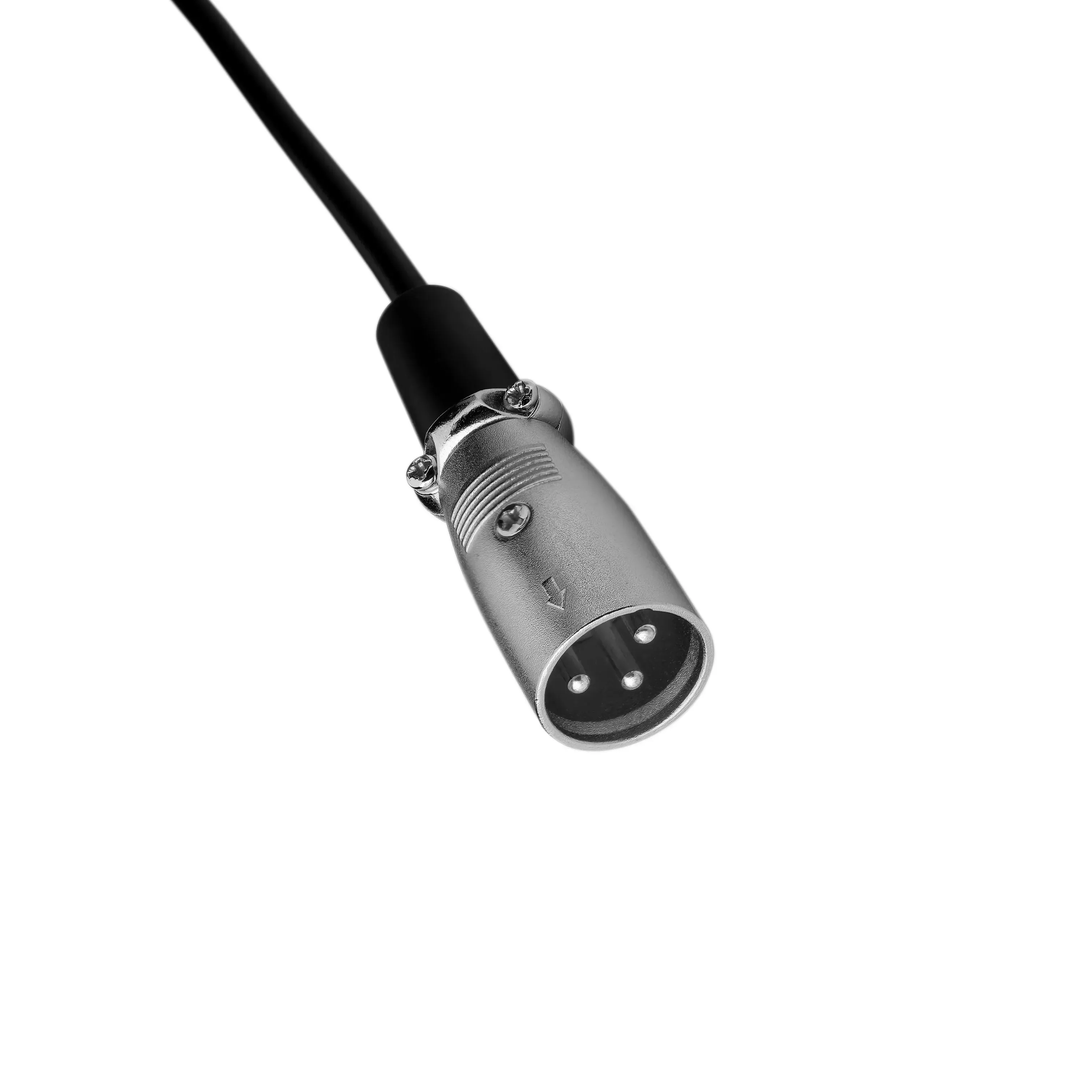
The 3-pin and 4-pin XLR connectors appear on medical, floor-care, and light mobility chargers. They are round, locking, and polarized.
Pin count is not a spec
A 3-pin XLR may carry B+, B−, and ground or temperature. A 4-pin adds a sense or comms line. You must know the pinout; the connector shape alone does not tell you which pin is which.
Proprietary and Fleet Plugs
Many OEMs use their own molded plugs—think of branded pallet trucks, scrubbers, and AGVs. These prevent cross-use and protect the battery. To replace or customize, you need the exact mating connector and pin definition, which the OEM supplies or our team can help identify via the contact page.
Ring Terminals and Lugs
For fixed installations, chargers may terminate in ring lugs or bare leads rather than a plug. This is common in stationary telecom and renewable storage. Use correctly crimped lugs and torque them to spec; loose lugs arc and burn.
How to Identify What You Have
- Photograph the plug from the front and side, and the battery socket.
- Note the current rating if printed on the housing.
- Count pins and any keying ribs.
- Trace or measure with a multimeter if safe, to map B+ and B−.
Send the photos to our engineers via the contact page and we will identify the type and pinout.
Polarity and Keying Safety
Reverse polarity can destroy electronics instantly. Quality connectors key the housing so the plug inserts only one way. If you are adapting, label both ends clearly and verify with a meter before first power-up. Never force a connector that resists—mismatched keys mean mismatched current or pinout.
Environmental Rating
Connectors in wet or dusty sites need an IP-rated housing or boot. Outdoor and washdown equipment should use sealed connectors. A plug rated for a dry office will fail in a wash bay.
Maintaining Connectors for Long Life
Connectors fail slowly, then suddenly. Most failures trace to contamination, loose crimping, or worn contacts rather than the connector design itself. A short maintenance habit prevents most downtime.
Keep contacts clean and dry. Wipe mating surfaces with a dry cloth; never use solvents that attack the housing. Inspect for discoloration or pitting, which signals arcing from a poor connection. Re-torque ring terminals on a schedule, because vibration loosens them. Replace a connector that runs hot under load—heat is the early warning of rising resistance. For fleet equipment, keep a spare mating connector on the shelf so a failed plug is a ten-minute swap, not a day of downtime.
Frequently Asked Questions
Can I adapt an SB50 to SB120?
No. The series are physically keyed to prevent mating. Use the correct series for your current; adapters that defeat keying are unsafe.
My 3-pin XLR charger has no label—now what?
Identify pins with a multimeter on a known battery, or send photos via the contact page. Do not guess; wrong wiring damages the BMS.
Does the connector affect charge speed?
Indirectly. A connector rated below the charge current overheats and limits safe current. Size the plug to the charger's output with margin.
Can I replace a proprietary plug myself?
For a one-off, possibly, if you have the mating connector and pinout. For production, standardize the connector with your supplier to avoid recurring fit issues.
Next Steps
Match the connector to current, environment, and pinout—not just the shape. Keep a photo of every battery plug in your fleet. When specifying a new charger, include the connector type and pin definition in your request through the contact page, and we will deliver a unit that plugs in and works.