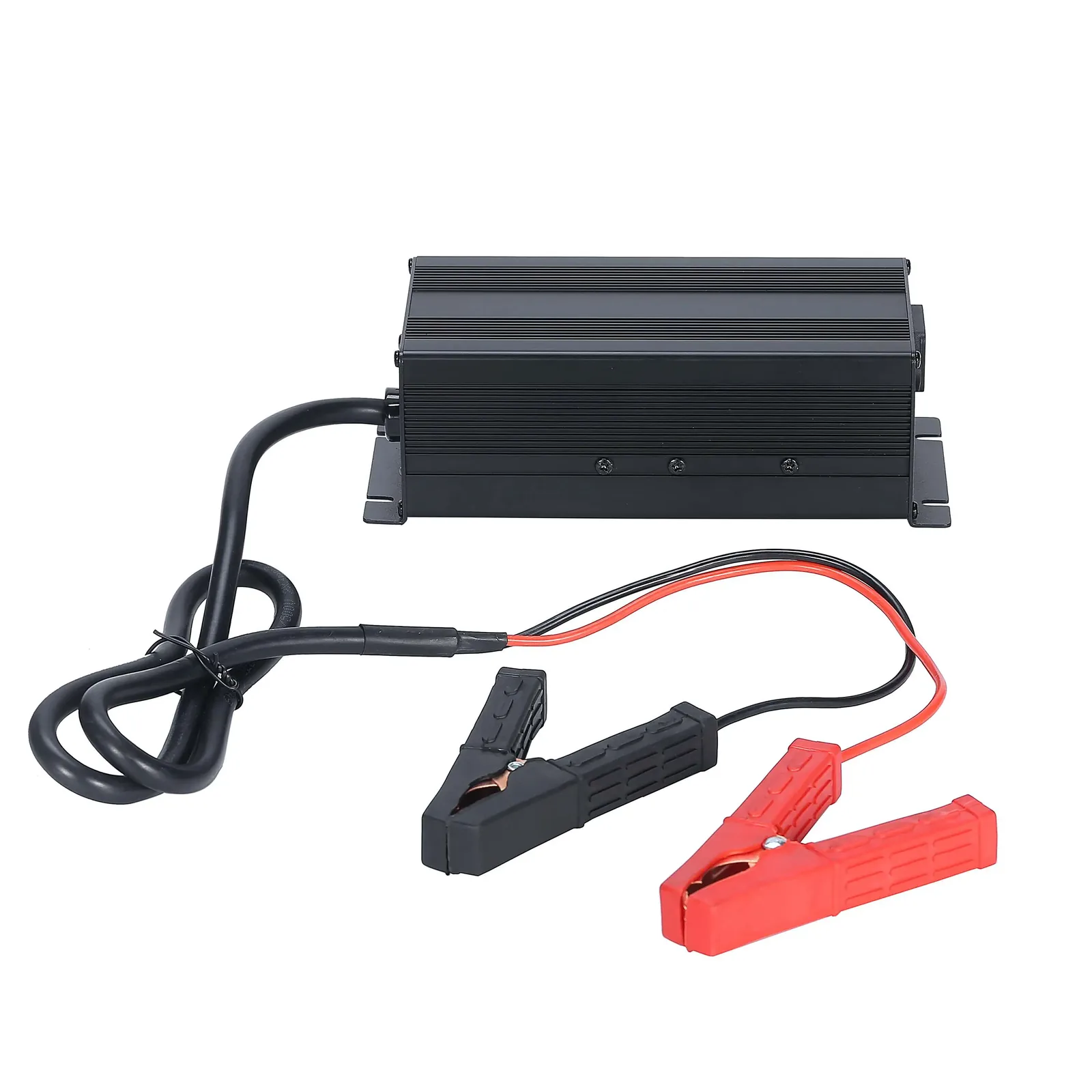
Forklift Charging Starts With the Traction Battery Voltage
In warehouses and ports, the forklift never stops—but its battery must. Choosing the right forklift battery charger begins with one number: the traction battery nominal voltage. Most industrial trucks run on 24V, 36V, 48V, or 80V systems, and the charger must match exactly. A mismatch is not a tuning problem; it is a different machine. This guide explains how to read the voltage, why lithium is changing the rules, and how to size current for your shift pattern.
If you are still deciding charger architecture generally, our battery charger selection guide is the place to start.
Reading the Nameplate
The truck's battery compartment or nameplate states the nominal voltage. Common configurations:
- 24V: small walkie stackers and pallet trucks (12 cells lead-acid, or 8S lithium)
- 36V: mid-size counterbalance trucks
- 48V: the most common class of reach and counterbalance trucks
- 80V: large capacity and container handlers
Never guess. The wrong voltage charger can fail to charge or, with lead-acid, overfill and gas dangerously. When in doubt, photograph the battery terminals and label and send them via the contact page.
Lead-Acid vs Lithium in Forklifts
Traditional fleets use flooded or AGM lead-acid. Lithium (LiFePO4) is now standard for new electric fleets because it supports opportunity charging and needs no equalization.
Lead-acid charging profile
Lead-acid uses bulk, absorption, and float, plus periodic equalization. Charge in a ventilated area; gassing releases hydrogen. A full cycle is 8+ hours, so fleets swap batteries mid-shift.
Lithium charging profile
Lithium uses CC-CV with no equalization and no gassing. It tolerates short, frequent top-ups during breaks—opportunity charging—which can eliminate battery swap rooms. See our lithium charger specification guide for the profile details.
Sizing Current to the Duty Cycle
Charge current determines how fast you recover. Lead-acid is typically charged at 0.1C–0.2C (a 600Ah pack at ~60–120A). Lithium accepts higher rates.
Opportunity charging math
If a truck gets two 30-minute breaks, a 100A+ lithium charger can add meaningful range each break. For a single overnight window, a lower-current charger is fine and cheaper. Match the charger to the actual shift pattern, not the catalog maximum.
Connectors and Safety Interlock
Forklift charging uses heavy connectors—Anderson SB175/SB350, or manufacturer-specific plugs—rated for hundreds of amps. Many systems include a safety interlock so the truck cannot drive while plugged in.
Verify the pinout
The connector carries B+, B−, and often temperature or comms pins. A wrong pinout can feed voltage to the wrong terminal. Our connector types reference helps confirm what you have before ordering.
Charger Placement and Cooling
High-current industrial chargers generate heat. Place them in a dry, ventilated charging station with clearance for airflow. Fan-cooled units move more air but need filter maintenance; fanless units run silent but at lower power density. Choose based on your environment and noise rules.
Certifications and Fleet Compliance
Fleet chargers must meet CE/UL and relevant EMC standards, and often site electrical codes for high-current DC. Confirm the unit is rated for continuous industrial duty, not occasional use. A consumer-grade charger will not survive a warehouse.
Multi-Shift Fleets: Swap vs Opportunity Charge
A 24/7 operation forces a charging strategy decision. The traditional model keeps a second or third battery per truck and swaps them on a schedule, charging the spares in a ventilated room during the shift. This needs storage space, handling equipment, and trained staff, but it is proven with lead-acid.
Lithium flips the math. Because it accepts opportunity charging without damage, a truck can top up during operator breaks and between shifts, often eliminating the swap room entirely. The trade-off is that you must install enough charging points at break areas and size each charger for the available window. For fleets mixing old lead-acid and new lithium trucks, plan separate charging zones—the profiles and connector interlocks differ, and cross-use invites errors.
Frequently Asked Questions
Can a 48V charger charge an 80V forklift?
No. Voltage must match the traction battery. Using a lower-voltage charger will not charge an 80V pack and may fault out.
Is opportunity charging safe for the battery?
With lithium, yes—frequent partial charges are normal and extend useful life versus deep cycles. With lead-acid, avoid partial charges; they cause sulfation.
Do I still need a battery room with lithium?
Usually not. Opportunity charging at breaks removes the swap-and-charge room, freeing floor space. This is a major reason fleets switch to lithium.
How do I confirm my connector?
Photograph the plug and label, then contact our team via the contact page. We will match the Anderson or proprietary type and pinout.
Next Steps
Write down your forklift's nominal voltage, battery capacity, and shift pattern. Those three facts select the charger. For lithium conversions or custom charging stations, talk to our engineers early through the contact page—we design for fleet duty cycles, not just a nameplate.