
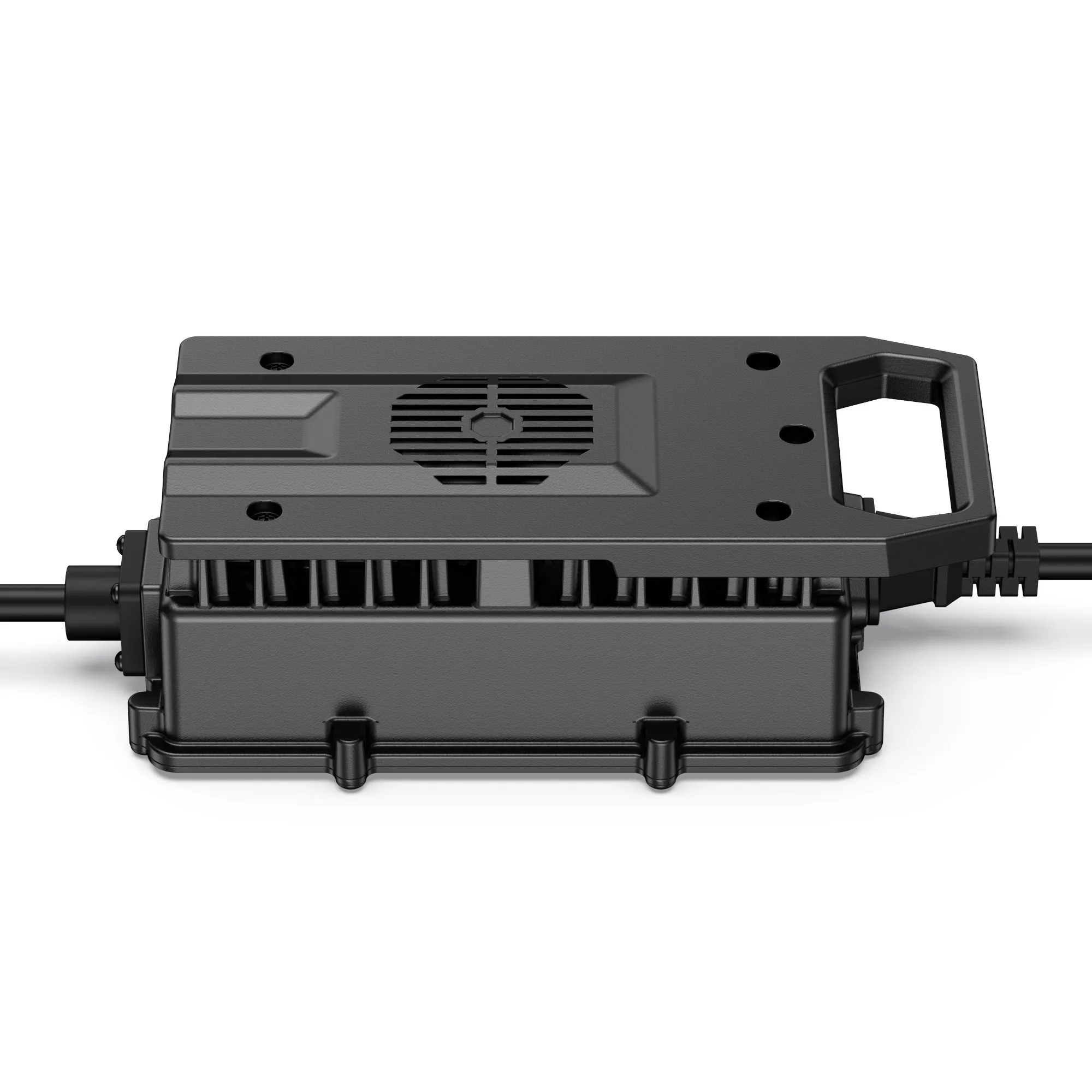
LiFePO4 vs Li-ion Chargers – Which is Better for Your Battery?
Using the wrong charger for your battery chemistry can permanently damage your battery or cause fire. This guide explains the critical differences between LiFePO4 and Li-ion chargers and how to choose the right one.
Quick Answer: Can I Use the Same Charger?
No! LiFePO4 and Li-ion batteries have different charging voltages and different charging profiles. Using a Li-ion charger on LiFePO4 battery (or vice versa) will result in:
- Undercharging: Battery never reaches full capacity (reduced range)
- Overcharging: Battery damage, fire risk (if voltage too high)
- Reduced lifespan: Wrong charging profile stresses battery cells
Key Differences at a Glance
| Feature | LiFePO4 (LFP) | Li-ion (NMC/LCO) |
|---|---|---|
| Cell Nominal Voltage | 3.2V | 3.6V / 3.7V |
| Cell Fully Charged Voltage | 3.65V | 4.2V |
| 16S Battery Voltage | 51.2V (53.6V max) | 57.6V (58.8V max for 14S) |
| Charging Profile | CC-CV (simpler) | CC-CV + trickle (more complex) |
| Safety | Very high (won't explode even if punctured) | Moderate (can explode if damaged/overcharged) |
| Cycle Life | 2000-5000 cycles | 500-1500 cycles |
| Charger Cost | Similar to Li-ion | Similar to LiFePO4 |
LiFePO4 Battery Chargers: Specifications and Requirements
Voltage Requirements (Critical!)
- 1-cell (3.2V nominal): Charger output = 3.65V
- 4S (12.8V nominal): Charger output = 14.6V
- 8S (25.6V nominal): Charger output = 29.2V
- 16S (51.2V nominal): Charger output = 53.6V (NOT 58.8V!)
Common mistake: Using 48V Li-ion charger (54.6V or 58.8V) on LiFePO4 battery → overcharging → reduced lifespan or fire!
Charging Profile for LiFePO4
- Constant Current (CC): Charge at constant current (e.g., 5A) until voltage reaches 3.65V/cell
- Constant Voltage (CV): Hold voltage at 3.65V/cell, current gradually decreases
- Cutoff: Stop when current drops to 0.05C (e.g., 0.5A for 10Ah battery)
No trickle charge needed: LiFePO4 has very low self-discharge (1-3% per month).
Advantages of LiFePO4 Chargers
- Simpler charging profile: No need for precise temperature compensation
- Higher safety: Even if charger fails and overcharges slightly, LiFePO4 won't explode
- Longer battery life: LiFePO4 tolerates more charging cycles
Li-ion Battery Chargers: Specifications and Requirements
Voltage Requirements (Critical!)
- 1-cell (3.6V nominal): Charger output = 4.2V
- 10S (36V nominal): Charger output = 42V
- 13S (48V nominal): Charger output = 54.6V
- 14S (52V nominal): Charger output = 58.8V
Common mistake: Using 52V charger (58.8V) on 48V battery (54.6V max) → overcharging → fire risk!
Charging Profile for Li-ion
- Constant Current (CC): Charge at constant current until voltage reaches 4.2V/cell
- Constant Voltage (CV): Hold voltage at 4.2V/cell, current decreases
- Cutoff: Stop when current drops to 0.05C
- Trickle charge (optional): Some chargers apply tiny current (0.01C) to compensate self-discharge
Temperature compensation: Li-ion charging voltage should be adjusted for temperature (reduce 0.3V/°C above 25°C).
Advantages of Li-ion Chargers
- Higher energy density: Li-ion batteries store more energy per kg (lighter eBike)
- Higher voltage options: 52V (14S) available for high-performance eBikes
- Lower cost: Li-ion batteries slightly cheaper than LiFePO4 (for same capacity)
Can a Smart Charger Handle Both Chemistries?
Yes! Some advanced chargers (like Juxon Power's programmable chargers) can handle both LiFePO4 and Li-ion by simply selecting the correct charging profile via DIP switch or button.
How to identify a dual-chemistry charger:
- Label says "LiFePO4 / Li-ion compatible"
- Has DIP switches or button to select battery type
- Comes with user manual explaining both profiles
Recommended: For eBike fleets or shops that service both battery types, invest in dual-chemistry chargers. Saves inventory cost and avoids mistakes.
How to Identify Your Battery Chemistry
Method 1: Check Battery Label
Look for:
- LiFePO4: Label says "LiFePO4", "LFP", "3.2V/cell"
- Li-ion: Label says "Li-ion", "NMC", "LiPo", "3.6V/cell" or "3.7V/cell"
Method 2: Check Charging Voltage
Measure your existing charger's output voltage:
- 36V battery + 42V charger: Li-ion (10S)
- 36V battery + 43.8V charger: LiFePO4 (12S – rare)
- 48V battery + 54.6V charger: Li-ion (13S)
- 48V battery + 53.6V charger: LiFePO4 (16S – common!)
Method 3: Check Battery Weight
For same capacity (Ah), LiFePO4 batteries are heavier (20-30% more) than Li-ion. If your eBike feels very light, it's likely Li-ion.
What Happens If You Use the Wrong Charger? (Real Cases)
Case 1: Li-ion Charger on LiFePO4 Battery
Example: 48V LiFePO4 battery (53.6V max) + 48V Li-ion charger (58.8V output)
Result: Charger tries to apply 58.8V to 53.6V battery → BMS overvoltage protection trips → charger shuts down (charger error) OR BMS fails → battery overcharge → fire!
Solution: Always verify charger output voltage matches battery max voltage (±0.5V).
Case 2: LiFePO4 Charger on Li-ion Battery
Example: 48V Li-ion battery (54.6V max) + 48V LiFePO4 charger (53.6V output)
Result: Charger only outputs 53.6V, but battery needs 54.6V for full charge → battery undercharged (90-95% SOC) → reduced range (5-10% less).
Long-term effect: Battery develops cell imbalance (some cells full, some not) → reduced lifespan.
Choosing the Right Charger: Decision Tree
Step 1: Identify Battery Chemistry
- Label says "LiFePO4" / "LFP" → Use LiFePO4 charger
- Label says "Li-ion" / "NMC" / "LiPo" → Use Li-ion charger
- Not sure? → Check charging voltage (see Method 2 above)
Step 2: Determine Battery Voltage
- Count battery cells (or check label): 10S = 36V, 13S = 48V, 14S = 52V, 16S = 48V LiFePO4
- Calculate max charging voltage: Li-ion = 4.2V × number of cells, LiFePO4 = 3.65V × number of cells
Step 3: Choose Charger with Matching Voltage
| Battery Type | Number of Cells | Charger Output Voltage |
|---|---|---|
| LiFePO4 12.8V | 4S | 14.6V |
| LiFePO4 25.6V | 8S | 29.2V |
| LiFePO4 51.2V | 16S | 53.6V |
| Li-ion 36V | 10S | 42V |
| Li-ion 48V | 13S | 54.6V |
| Li-ion 52V | 14S | 58.8V |
FAQ: LiFePO4 vs Li-ion Chargers
Can I modify a Li-ion charger to charge LiFePO4?
Not recommended! Charger voltage is set by internal voltage reference and transformer turns ratio. Modifying it requires advanced electronics skills and may create safety hazards. Better to buy a proper LiFePO4 charger (€50-€100) than risk damaging your battery (€500+).
Which is better: LiFePO4 or Li-ion for eBikes?
It depends on your priorities:
- Choose LiFePO4 if: You prioritize safety (won't catch fire), lifespan (2000-5000 cycles), or live in hot climate (LiFePO4 tolerates heat better).
- Choose Li-ion if: You want lighter weight (important for pedal-assist eBikes), higher voltage options (52V for speed), or lower initial cost.
2026 trend: More eBike manufacturers are switching to LiFePO4 for safety and longevity, especially for city eBikes and e-scooters.
Conclusion: Always Match Charger to Battery Chemistry
The golden rule: Never guess – always verify your battery chemistry and voltage before buying a charger.
- LiFePO4 battery: Use LiFePO4 charger (3.65V/cell charging voltage)
- Li-ion battery: Use Li-ion charger (4.2V/cell charging voltage)
- Not sure? Ask battery manufacturer or check with multimeter
Need a charger for your battery? Contact Juxon Power – we manufacture both LiFePO4 and Li-ion chargers (36V/48V/52V) with precise voltage control and full safety certifications (CE/UL/TÜV).