
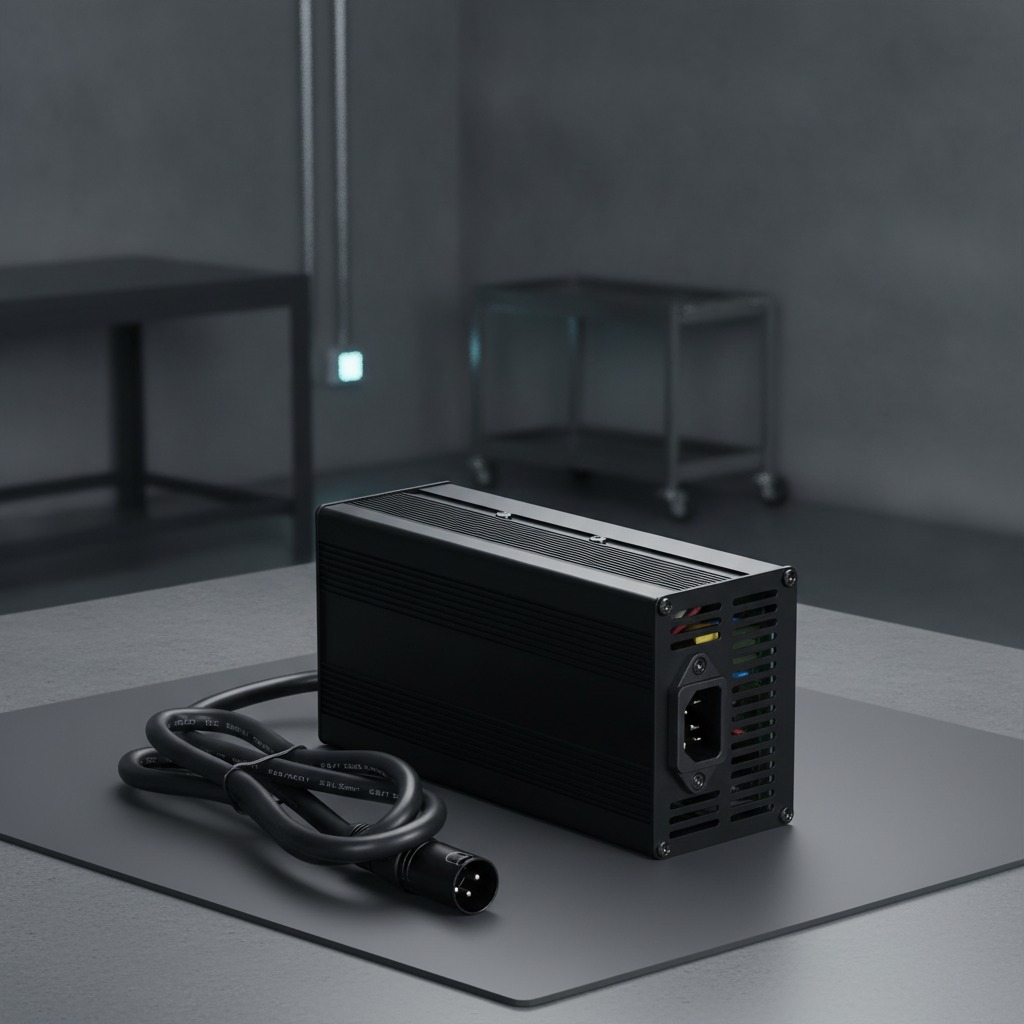
Why Spec Sheets Matter for OEM Buyers
When sourcing battery chargers for e-bikes, electric scooters, AGVs, or industrial equipment, the spec sheet is your most important reference document. It tells you whether the charger is safe, compatible, efficient, and compliant with your target market. This guide explains how to read battery charger specifications like a professional buyer.
1. Output Voltage Must Match the Battery Pack
The output voltage is the first specification to check. A 36V lithium battery requires a 42V charger, while a 48V lithium battery needs a 54.6V charger. Using the wrong voltage can damage the battery, void the warranty, and create safety risks.
Juxon offers a full range of voltage-matched chargers, including the 42V 2A e-bike charger and the 54.6V 2A lithium battery charger, both available for OEM customization.
2. Output Current Determines Charging Speed
Current is measured in amperes (A). Higher current means faster charging, but only if the battery's BMS allows it. A 2A charger is typical for overnight e-bike charging, while 4A–5A models are used when faster turnaround is needed. For industrial applications, Juxon supplies high-power models such as the 900W 48V 18A industrial charger.
3. Connector Type Defines Physical Compatibility
Common connector types include XLR, GX16, DC 5.5x2.1mm, Rosenberger, Yamaha, Bosch, and XT60. The connector listed on the spec sheet must match the customer's existing fleet or the market standard. Juxon supports custom connector configurations for OEM orders.
4. Safety Protections Are Non-Negotiable
Every professional battery charger should include at least the following protections:
- Over Voltage Protection (OVP)
- Over Current Protection (OCP)
- Short Circuit Protection (SCP)
- Over Temperature Protection (OTP)
- Reverse Polarity Protection
Products without these protections are not suitable for B2B or international distribution.
5. IP Rating: IP65 vs IP67
For outdoor, warehouse, or marine environments, the IP rating is critical. IP65 protects against dust and water jets, while IP67 protects against temporary immersion. For demanding applications, Juxon's IP67 waterproof charger is an ideal choice.
6. Certifications Determine Market Access
Certifications are not optional; they are market access requirements. Key certifications include:
- CE and RoHS for Europe
- UKCA for the United Kingdom
- FCC and UL for North America
- PSE for Japan
Juxon can support the certification process for the markets you target.
7. Efficiency, Operating Temperature, and Dimensions
Efficiency of 90% or higher reduces heat and electricity costs. A wide operating temperature range (-20°C to +50°C) ensures reliability in harsh environments. Dimensions and weight affect shipping costs and product integration.
Summary
Reading a battery charger spec sheet is a critical skill for OEM buyers. By checking these seven points—voltage, current, connector, protections, IP rating, certifications, and efficiency—you can make informed decisions and avoid costly mistakes.
Frequently Asked Questions
What does CC/CV mean on a charger spec sheet?
CC/CV stands for Constant Current / Constant Voltage, the standard charging method for lithium batteries. The charger delivers constant current until the battery approaches full voltage, then switches to constant voltage to finish the charge safely.
Can I use a 42V charger on a 36V battery?
Yes, if it is a 10S lithium battery pack. A 36V nominal battery pack has a full charge voltage of approximately 42V. Always confirm the cell configuration before selecting a charger.
Does Juxon offer custom chargers for my brand?
Yes. Juxon provides full OEM/ODM services, including custom voltage, current, connector, housing, logo, label, and packaging. Contact us for details.
How quickly can I receive a quote?
We typically respond within 24 hours after confirming the required specifications. Use our contact form or WhatsApp for the fastest response.
Which certifications are included by default?
Most standard models come with CE and RoHS. Additional certifications such as FCC, UKCA, UL, or PSE can be arranged depending on the model and target market.
Get the Right Charger for Your Application
Browse Juxon's full product range on the products page or request a 24-hour OEM quote today.