
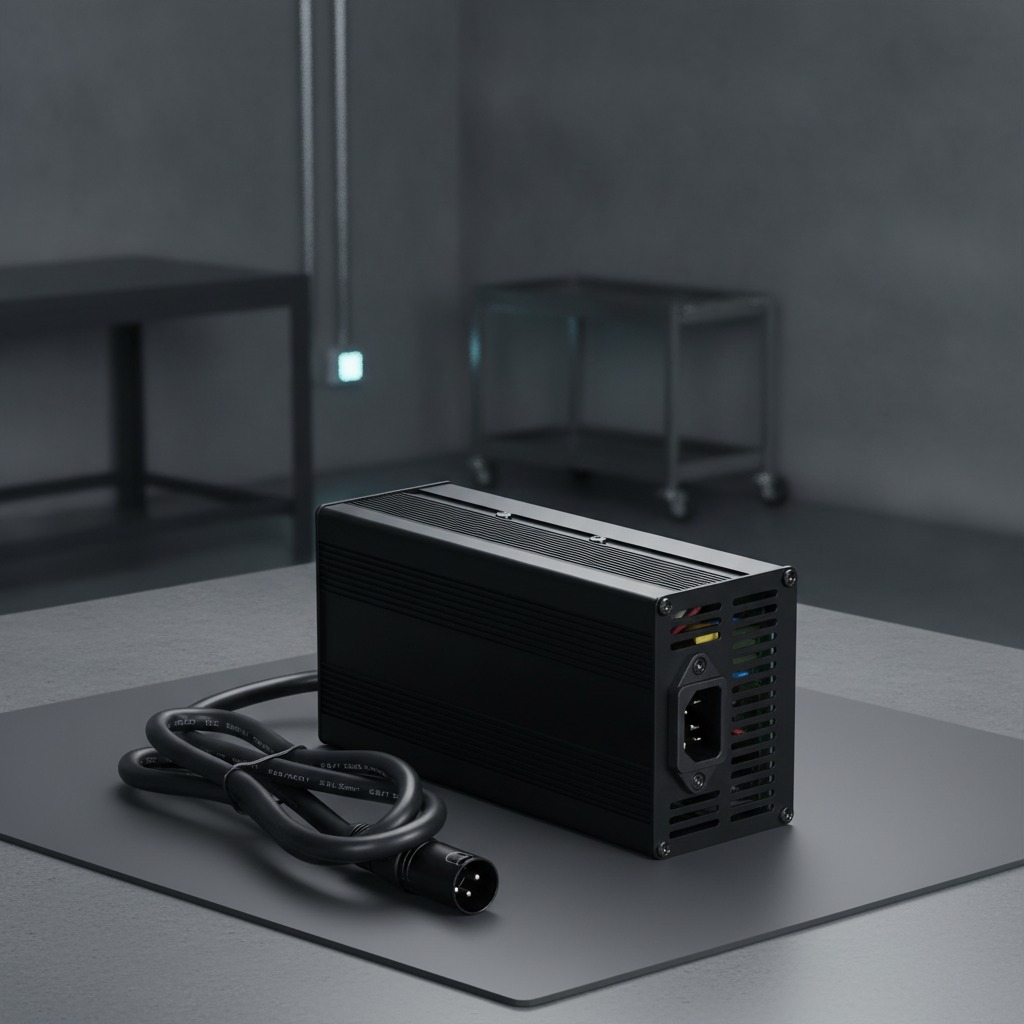
Choosing the right lithium battery charger is critical for battery safety, lifespan, and performance. This guide covers everything B2B buyers need to know before sourcing chargers.
1. Match the Charger Voltage to Battery Voltage
The charger output voltage must match the battery's full-charge voltage, not the nominal voltage. For example:
- 36V Li-ion battery (10S) needs a 42V charger
- 48V Li-ion battery (13S) needs a 54.6V charger
- 52V Li-ion battery (14S) needs a 58.8V charger
- 60V Li-ion battery (16S) needs a 67.2V charger
- 72V Li-ion battery (20S) needs an 84V charger
Using the wrong voltage can cause undercharging, overcharging, or battery damage.
2. Choose the Right Charging Current
Charging current affects charge time and battery health. The general rule is 0.2C to 0.5C of battery capacity:
- 10Ah battery: 2A-5A charger is ideal
- 20Ah battery: 4A-10A charger is ideal
For faster charging, choose a 4A or 5A charger, but always confirm the battery BMS supports the higher current.
3. Battery Chemistry: Li-ion vs LiFePO4
Li-ion (NMC/NCA) and LiFePO4 batteries require different charging profiles:
- Li-ion: 4.2V per cell full charge (42V for 36V battery)
- LiFePO4: 3.65V per cell full charge (14.6V for 12V battery)
Never use a Li-ion charger for a LiFePO4 battery or vice versa. Always confirm the battery chemistry before ordering.
4. Connector Type
Common connectors include 3-pin XLR, 4-pin XLR, DC barrel plug, Rosenberger, Bosch oval, and XT60. Always send a photo of the original charger connector to your supplier for compatibility confirmation.
5. Certifications
Different markets require different certifications: CE/RoHS for Europe, UL/FCC for USA, PSE for Japan, KC for Korea, SAA for Australia. Ensure your charger has the right certifications for your target market.
Conclusion
Always provide your battery specifications (voltage, chemistry, capacity, connector photo) to your charger supplier. At Juxon, we help you confirm the correct charger configuration within 24 hours. Contact us for a free quote.