
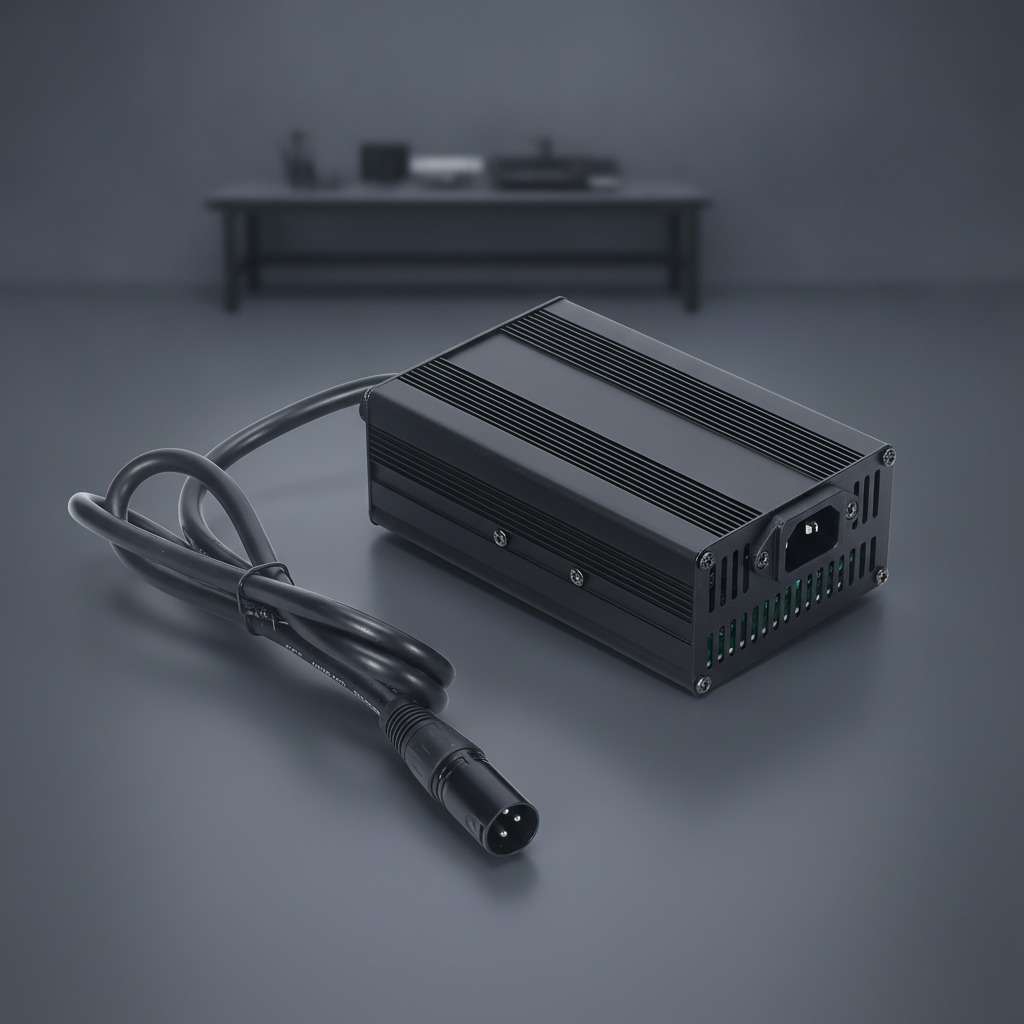
E-bike charger selection requires matching multiple parameters. This guide walks through each one.
Step 1: Identify Your Battery Voltage
Check the label on your e-bike battery. Common nominal voltages and their charger requirements:
- 36V battery → 42V charger
- 48V battery → 54.6V charger
- 52V battery → 58.8V charger
- 60V battery → 67.2V charger
Step 2: Choose the Charging Current
Most e-bike chargers are 2A (standard) or 4A (fast charge). A 2A charger takes about 4-6 hours for a full charge. A 4A charger cuts that time in half. Always verify your battery BMS supports the higher current.
Step 3: Identify the Connector
E-bike connector types vary by brand:
- Bosch: Oval 3-pin plug
- Yamaha: Round connector or 7-pin
- Phylion/Stella: 5-pin or 2-pin RCA
- BMZ: Rosenberger magnetic plug
- QWIC: 4-pin XLR
- Standard: 3-pin XLR or DC barrel
Always send a photo of your original charger's connector to the supplier.
Step 4: Confirm Battery Chemistry
Most e-bikes use Li-ion (NMC) batteries requiring 42V for 36V systems. Some use LiFePO4 which requires a different charging profile. Check the battery label.
Step 5: Check Certifications
For EU market: CE, RoHS, UKCA. For US: UL, FCC. For Japan: PSE. Ensure the charger has the correct certifications.
OEM/Wholesale Considerations
For B2B buyers, also consider: customization options (logo, label, packaging), MOQ, lead time, warranty (12 months standard), and after-sales support. Contact Juxon for OEM e-bike charger quotes.