
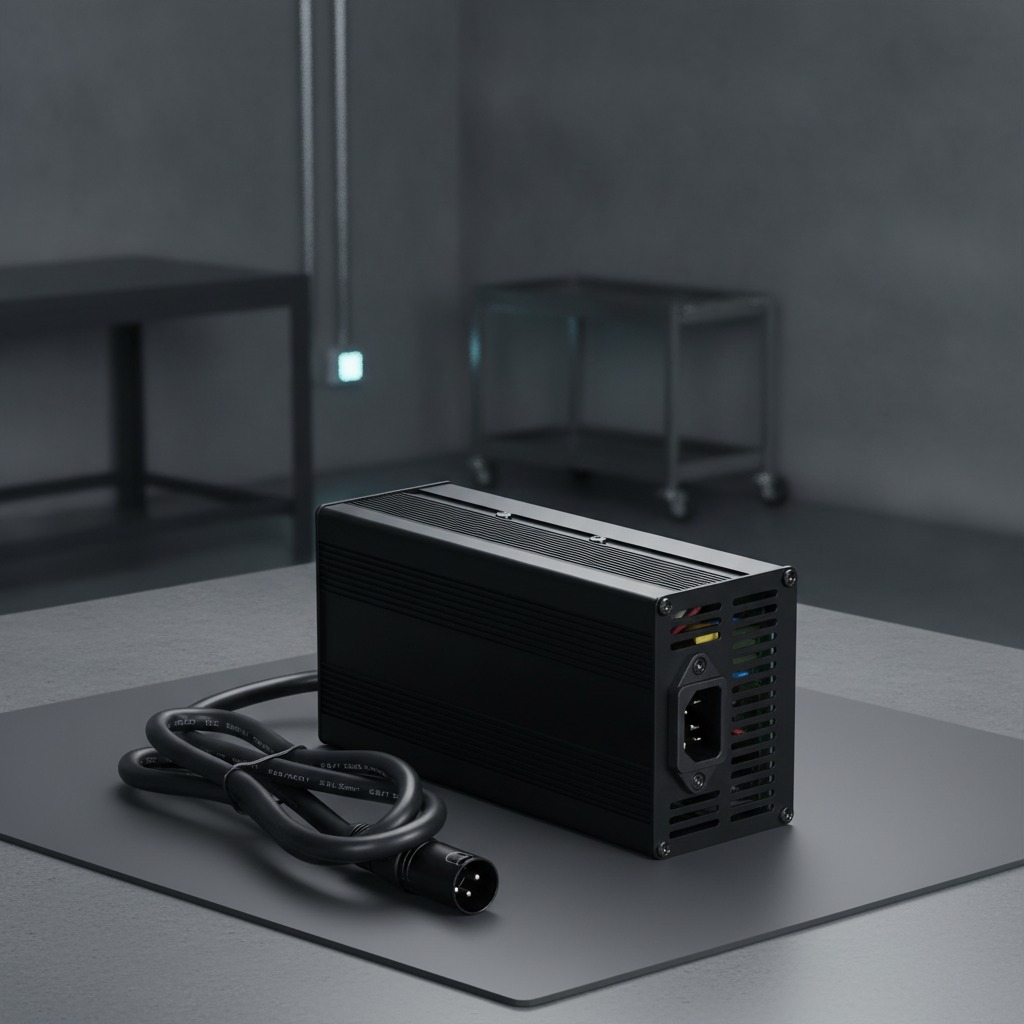
Why Battery Chemistry Matters for Charger Selection
For quotation and bulk orders, please contact kevin@juxonpower.com.
For technical support or backup contact, please contact lee@juxonpower.com.
Frequently Asked Questions (FAQ)
Can I use a LiFePO4 charger on a Li-ion battery pack?
No. LiFePO4 cells charge to 3.65V per cell while standard Li-ion cells charge to 4.2V per cell. Using a LiFePO4 charger on a Li-ion pack will undercharge it; using a Li-ion charger on LiFePO4 can dangerously overcharge and damage cells. Always match the charger to your battery chemistry.
What is the cost difference between LiFePO4 and Li-ion chargers?
LiFePO4 chargers are typically 5-15% more expensive than equivalent Li-ion chargers due to tighter voltage tolerance requirements (3.65V vs 4.2V per cell cutoff). For 48V systems, expect $30-50 more per unit at the OEM level.
Which chemistry is safer for E-Bike and E-Scooter applications?
LiFePO4 is inherently safer: it has higher thermal stability, no thermal runaway risk below 270C, and longer cycle life (2000-5000 cycles vs 500-1500 for Li-ion). For commuter e-bikes and shared e-scooter fleets, LiFePO4 is the preferred chemistry.
Do I need a BMS for LiFePO4 or Li-ion battery packs?
Yes, both chemistries require a Battery Management System (BMS) for cell balancing, over-voltage protection, and thermal management. The charger provides the correct CC/CV profile, and the BMS handles cell-level safety.
What charger voltage do I need for my 48V e-bike battery?
A 48V nominal battery (13S Li-ion or 16S LiFePO4) requires a 54.6V (Li-ion) or 58.4V (LiFePO4) charger. Always verify your battery chemistry before selecting a charger. Juxon offers 54.6V and 58.4V chargers in 2A-5A current ratings for OEM e-bike projects.