
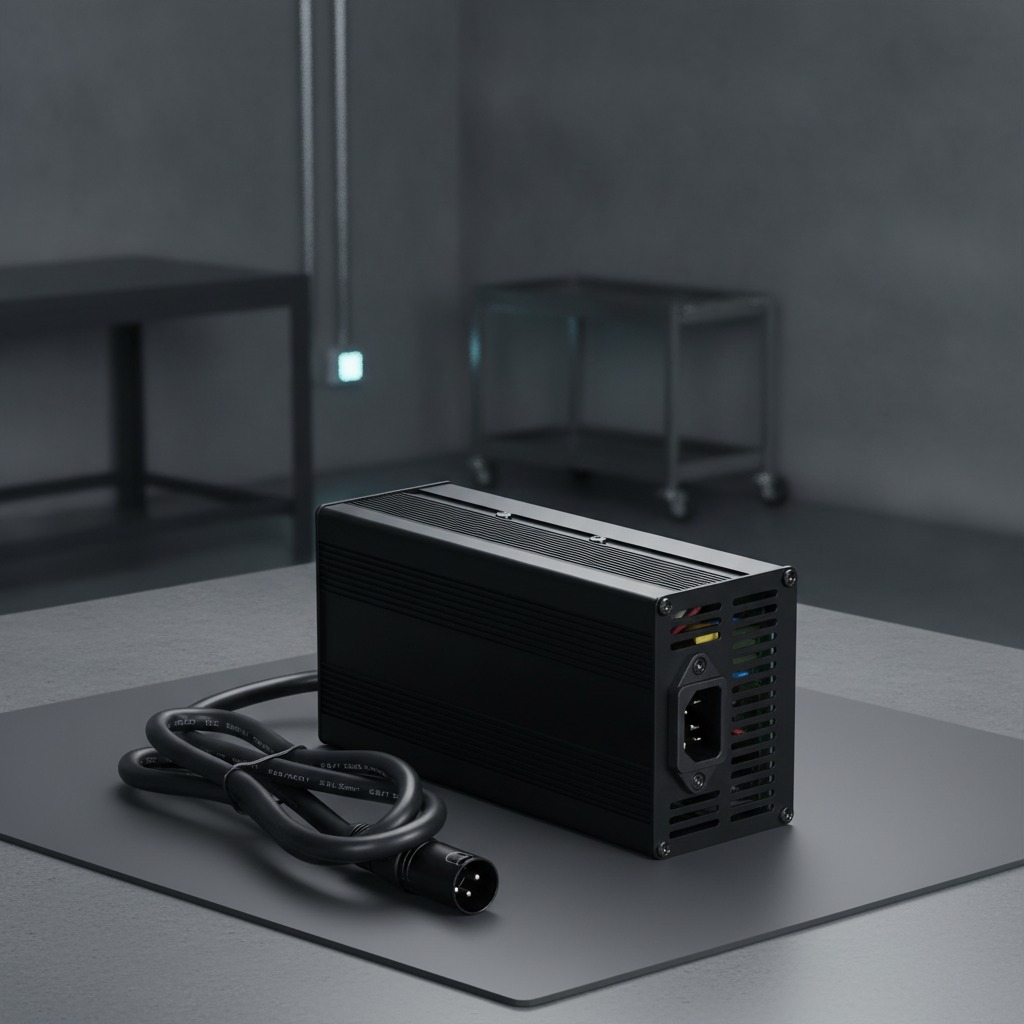
How to Test EBike Charger Quality – 7 Simple Checks Before Buying
Low-quality eBike chargers can damage your battery (€500-€1000+), cause fires, or simply fail prematurely. This guide shows you 7 simple checks to verify charger quality before buying.
Why Charger Quality Matters
- Battery protection: Good chargers have precise voltage cutoff (±0.1V) – cheap ones can overcharge
- Battery lifespan: Quality chargers use CC-CV charging profile – extends battery life by 20-30%
- Safety: UL/CE-certified chargers have OVP, OCP, OTP, SCP protection
- Efficiency: Good chargers are 85-90% efficient – cheap ones waste energy as heat
Check 1: Voltage Accuracy (Most Important!)
What to check: Measure charger output voltage with multimeter (no load).
Good charger: Output voltage = rated voltage ±0.5V (e.g., 42V charger should read 41.5-42.5V)
Bad charger: Voltage >43V (overcharge risk) or <40V (won't fully charge battery)
How to test: Use DC voltmeter on charger output (red probe to +, black to -).
Check 2: Ripple and Noise (Advanced)
What is ripple: AC noise on DC output – causes battery heating and reduced lifespan.
Good charger: Ripple <100mV peak-to-peak (measure with oscilloscope)
Bad charger: Ripple >300mV – damages battery cells over time
Without oscilloscope: Feel charger temperature – excessive ripple = excessive heat
Check 3: Charging Efficiency
How to calculate: Efficiency = (Output Power / Input Power) × 100%
Example: 42V 2A output (84W) / 100W input = 84% efficiency
Good charger: 85-90% efficiency
Bad charger: <80% efficiency – wastes energy, gets very hot
Check 4: Protection Functions
Quality chargers MUST have these protections:
- OVP (Over Voltage Protection): Stops charging if voltage exceeds safe limit
- OCP (Over Current Protection): Limits current to safe value
- OTP (Over Temperature Protection): Shuts off if internal temp >80°C
- SCP (Short Circuit Protection): Safe even if output shorted
- Reverse Polarity Protection: No damage if you connect backward
How to test: Ask the manufacturer for a third-party test report (TÜV / SGS / Intertek) covering short-circuit protection, or have a qualified laboratory verify it. A quality charger limits fault current safely by design — never short the output yourself; deliberate shorting is hazardous and must only be done by trained personnel with proper equipment.
Check 5: Build Quality and Components
Enclosure: Should be flame-retardant (UL 94 V-0 rating). Smell test – cheap chargers smell like burning plastic.
Cable quality: Thick cables (18AWG or thicker for 2A+ chargers). Thin cables = fire hazard.
Weight: Good 36V 2A charger weighs 400-600g. Lightweight (<300g) = missing components or low-quality transformer.
Connector: Should fit tightly, no wobble. Gold-plated contacts preferred.
Check 6: Certifications (Don't Trust the Label!)
CE mark: Easy to fake. Verify with manufacturer's CE certificate (should have test lab name, certificate number, date).
UL mark: Harder to fake. Check UL online database (enter file number from charger label).
How to verify: Ask supplier for:
- Test report from TÜV/SGS/Intertek (not just a certificate)
- Factory ISO 9001 certification
- Component certifications (transformer, capacitors)
Check 7: Warranty and Support
Good charger brands: 2-3 year warranty, responsive technical support
Bad signs: 1-year warranty (or none), no technical support, no company website
How to check: Email technical question before buying. Good suppliers respond within 24-48 hours with detailed answer.
Quick Quality Test: The "Hand Test"
- Weight test: Hold charger – should feel substantial (400g+ for 36V 2A)
- Temperature test: Charge for 30 minutes – case should be warm (40-50°C), NOT hot (>60°C)
- Cable flex test: Gently bend output cable near connector – no sparking or flickering LED
- Label check: Specifications should match (input 100-240V, output XXV YYA, efficiency rating)
Red Flags: Avoid These Chargers!
- Price too good to be true (€20 for 48V charger = junk)
- No brand name or manufacturer info
- CE/UL mark looks pixelated or poorly printed
- Enclosure smells like cheap plastic
- Very lightweight (<300g for 2A charger)
- No OVP/OCP/OTP/SCP mentioned in specs
Recommended Quality Chargers (2026)
- Juxon Power 36V/48V/52V series: CE/TÜV certified, IP67 option, 2-3 year warranty
- Original equipment (Bosch, Shimano): Most expensive but 100% compatible
- Branded alternatives (Ancheer, FLISR): Mid-range, decent quality
FAQ: Testing Charger Quality
Can I test charger quality without expensive equipment?
Yes! The "hand tests" (weight, temperature, cable flex) catch 80% of low-quality chargers. For voltage accuracy, a $10 multimeter is sufficient. If you're buying in bulk, ask supplier for sample and send to TÜV/SGS for professional testing (€300-€500).
Is it safe to buy chargers on AliExpress/Amazon?
It depends. Some AliExpress/Amazon sellers offer genuine quality chargers (check reviews, ask for certifications), but many sell counterfeits. Safe approach: buy from established brands (Juxon Power, Ancheer) or authorized distributors. If buying unknown brand, perform the 7 checks in this guide before use.
Conclusion: Don't Risk Your Battery on a Cheap Charger
Your eBike battery costs €500-€1000+ – protecting it with a quality charger (€60-€120) is a smart investment. Use these 7 checks to verify quality before buying, and don't hesitate to pay 20-30% more for a certified, warrantied charger from a reputable supplier.
Need a quality charger? Contact Juxon Power for CE/TÜV-certified 36V/48V/52V eBike chargers with 2-3 year warranty and full test reports.