
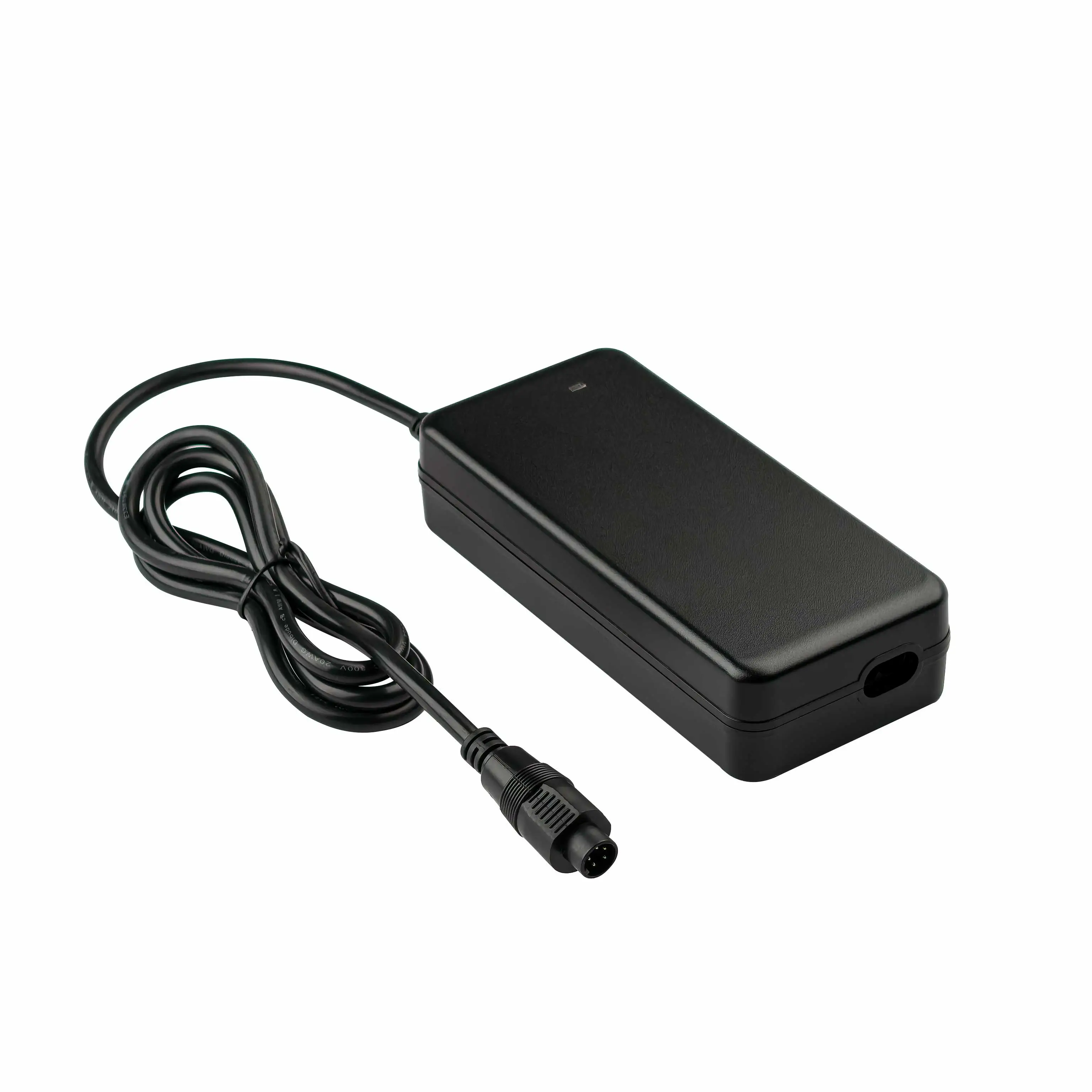
EBike Charger Not Charging – 7 Common Faults and Solutions
Your eBike charger won't charge? Don't panic. This guide covers 7 common faults and step-by-step solutions. Save money by fixing it yourself, or know when it's time to replace.
Safety First! (Read Before Troubleshooting)
Quick Diagnostic Flowchart
- Check power light: Is there ANY LED on the charger?
- Check connection: Is charger firmly connected to battery?
- Try different outlet: Maybe the wall socket is dead?
- Check battery: Is battery completely dead (>6 months unused)?
Fault 1: No Power LED (Charger Dead)
Symptoms
- No LED lights up when plugged into wall
- Charger is completely dead
Causes & Solutions
Cause 1: Blown fuse (if charger has fuse)
Solution: Open charger (unplug first!), check fuse with multimeter. Replace if blown. But – if fuse blew, there's an underlying fault. Don't just replace fuse without checking other components.
Cause 2: Broken power cord
Solution: Check power cord with multimeter (continuity test). If broken, replace cord (standard IEC C13/C14 or figure-8 connector).
Cause 3: Internal component failure (capacitor, transformer, etc.)
Solution: Not worth repairing. Replace the charger. Repair cost > new charger price.
Fault 2: Power LED On, But No Charging LED
Symptoms
- Power LED lights up (green/red)
- But when connected to battery, no charging LED
- Battery not charging
Causes & Solutions
Cause 1: Bad connection at battery port
Solution: Clean battery port (use contact cleaner or isopropyl alcohol). Check for bent pins. Try wiggling connector while connected – if charging LED flickers, connection is bad.
Cause 2: Charger output voltage too low
Solution: Measure charger output with multimeter (should be 42V/54.6V/58.8V depending on model). If output is 0V or very low (<30V), charger has internal fault. Replace.
Cause 3: Battery BMS (Battery Management System) fault
Solution: This is NOT the charger's fault. Battery BMS has tripped (over-discharge protection). Try "waking up" the battery: connect to original charger for 30+ minutes (some BMS reset with low-current trickle). If still no charging, battery needs professional repair or replacement.
Fault 3: Charging Starts, Then Stops Quickly
Symptoms
- Charging LED lights up initially
- But after 5-30 minutes, charger stops (LED changes to "full" or turns off)
- Battery only partially charged
Causes & Solutions
Cause 1: Charger overheating (OTP tripped)
Solution: Feel charger temperature. If very hot (>70°C), OTP (Over-Temperature Protection) has tripped. Let charger cool for 30 minutes. Then:
- Ensure charger is in well-ventilated area (not under pillow, not in sealed bag)
- Check if charger fan is working (if equipped)
- If problem persists, replace charger (internal component degrading)
Cause 2: Battery cell imbalance
Solution: Battery has one or more weak cells. BMS stops charging to protect those cells. Battery needs professional balancing. Not a charger fault.
Cause 3: Loose connection (intermittent)
Solution: Check all connections. Wiggle test (gently wiggle connectors while charging). If charging stops when wiggling, connection is bad. Clean/replace connector.
Fault 4: Charger Gets Very Hot
Symptoms
- Charger temperature >80°C (too hot to touch for >3 seconds)
- Maybe charger stops after 10-20 minutes (OTP tripped)
Causes & Solutions
Cause 1: Low-quality charger (inefficient design)
Solution: Cheap chargers (<€30 / $35) have <80% efficiency – lots of energy wasted as heat. Replace with quality charger (Juxon, Bosch, Shimano).
Cause 2: Charging in hot environment
Solution: Move charger to cooler location. Don't charge in direct sunlight or inside sealed car.
Cause 3: Internal fault (failing capacitor, etc.)
Solution: Stop using immediately! Fire hazard. Replace charger.
Fault 5: Charging Takes Too Long (Over 8 Hours)
Symptoms
- Charger runs for 8+ hours but battery still not full
- Or charging current is very low (<1A for 10Ah battery)
Causes & Solutions
Cause 1: Using lower-current charger than recommended
Solution: Check battery label for recommended charge current. If battery says "Max charge current: 5A" but you're using 2A charger, charging will be slow. Use higher-current charger (3A or 4A).
Cause 2: Battery capacity degraded (old battery)
Solution: Li-ion batteries degrade over time (500-1000 cycles). If your battery is 3+ years old, it might have reduced capacity. Consider replacing battery.
Cause 3: Charger fault (not delivering full current)
Solution: Measure charging current with clamp meter. If charger is rated 3A but only delivering 1-2A, charger is faulty. Replace.
Fault 6: Charger Makes Clicking/Buzzing Noise
Symptoms
- Charger makes audible clicking, buzzing, or whistling noise
- Noise is NOT just mild hum (mild hum is normal for switch-mode chargers)
Causes & Solutions
Cause: Transformer or capacitor failing
Solution: Stop using immediately! Noise indicates failing components – fire hazard. Replace charger. Don't try to repair (failing transformer = complicated repair).
Fault 7: LED Indicators Don't Match Manual
Symptoms
- Charger LEDs show different pattern than described in manual
- Example: Red LED stays on (supposed to turn green when full)
Causes & Solutions
Cause 1: Different charger model (not original)
Solution: If you're using replacement charger (not original), LED patterns might be different. Check replacement charger's manual (or contact manufacturer for LED explanation).
Cause 2: Charger fault
Solution: If LEDs behave erratically (flashing, wrong colors), charger has internal fault. Replace.
When to Replace vs. Repair
| Situation | Repair? | Replace? | Reason |
|---|---|---|---|
| Broken power cord | ✅ Yes | ❌ No | Simple fix, $5-10 |
| Blown fuse (with known cause fixed) | ✅ Yes | ❌ No | Fuse is $1-2 |
| Internal component failure (capacitor, IC) | ❌ No | ✅ Yes | Repair cost > new charger price |
| Charger >3 years old | ❌ No | ✅ Yes | Technology improved, new charger more efficient |
| Smell burning plastic | ❌ No | ✅ YES (immediately!) | Fire hazard |
Where to Buy Replacement Charger
Option 1: Original Equipment (Bosch, Shimano, etc.)
Pros: 100% compatible, manufacturer warranty
Cons: Expensive (€129-€299)
Best for: Premium eBikes, warranty still valid
Option 2: Compatible Replacement (Juxon Power, Ancheer, etc.)
Pros: 40-60% cheaper, same specifications, CE certified
Cons: Not original (but functionally identical if specs match)
Best for: Out-of-warranty eBikes, budget-conscious riders
Recommended: Juxon Power 48V eBike Chargers – CE certified, 2-3 year warranty, 40-60% cost savings.
FAQ: EBike Charger Troubleshooting
Can I repair a broken eBike charger myself?
It depends on the fault. Simple fixes (broken power cord, blown fuse) can be DIY. But internal component failure (capacitor, transformer, IC) is NOT worth repairing – new charger costs €60-€120, while repair requires specialized skills and parts. Plus, improper repair creates fire hazard. Safest option: replace with new charger.
How do I know if my charger or battery is faulty?
Test with multimeter:
- Measure charger output (should be 42V/54.6V/58.8V). If 0V or very low → charger fault.
- If charger output is correct, measure battery voltage. If <30V (for 36V battery) or <40V (for 48V battery) after charging attempt → battery fault (BMS tripped or cell failure).
If you don't have multimeter, try a different charger on your battery (if possible). If different charger works → original charger is faulty. If different charger also doesn't work → battery is faulty.
Conclusion: Troubleshoot First, Then Replace
Before buying a new charger:
- ✅ Check connections (clean battery port)
- ✅ Try different power outlet
- ✅ Measure charger output with multimeter (if you have one)
- ✅ Let charger cool if overheating
If fault persists, replace with quality charger. Don't waste money on repair (unless it's just a broken power cord).
Need a replacement charger? View Juxon Power eBike Chargers – CE certified, 2-3 year warranty, fast shipping worldwide.