
How to Choose the Right Lithium Battery Charger: A B2B Sourcing Guide
Audience: Procurement managers, battery pack manufacturers, e-bike/scooter brands, distributors

How to Choose the Right Lithium Battery Charger: A B2B Sourcing Guide
Audience: Procurement managers, battery pack manufacturers, e-bike/scooter brands, distributors
Reading time: 8 minutes
Bottom line: A wrong lithium battery charger costs you returns, warranty claims and lost clients. This guide covers the 7 decisions you must get right before placing an OEM or wholesale order — battery chemistry, voltage matching, current sizing, connector type, charging profile, protection and certification.
Why Lithium Battery Charger Selection Goes Wrong
Most charger sourcing failures we see at Juxon are not quality problems. They are matching problems. A distributor orders a “48V charger” that turns out to be a lead-acid profile unit. A brand orders 5,000 units with the wrong XLR pinout. An OEM client specifies 54.6V output for a battery pack that actually needs 58.8V.
These mistakes share one root cause: the buyer treated the charger as a commodity part and skipped technical confirmation. In B2B, a charger is not a generic power brick — it is a chemistry-specific, connector-specific, voltage-specific component that must match the battery pack exactly.
This guide walks through the 7 decisions that determine whether your charger order succeeds or becomes after-sales burden.
1. Confirm Battery Chemistry First: Li-ion vs LiFePO4
Lithium is not one chemistry. The two most common in e-bikes, scooters and industrial applications are Li-ion (NMC/NCA) and LiFePO4 (LFP). They charge at different voltages and require different charging profiles.
| Parameter | Li-ion (NMC/NCA) | LiFePO4 (LFP) |
|---|---|---|
| Nominal cell voltage | 3.6V / 3.7V | 3.2V |
| Full charge per cell | 4.2V | 3.65V |
| 12V pack (4S) charge voltage | 16.8V | 14.6V |
| 24V pack charge voltage | 29.4V (7S) / 25.2V (6S) | 29.2V (8S) |
| 36V pack charge voltage | 42V (10S) | — |
| 48V pack charge voltage | 54.6V (13S) | 58.4V (16S) |
| 60V pack charge voltage | 67.2V (16S) | — |
| 72V pack charge voltage | 84V (20S) | 87.6V (24S) |
| Charging profile | CC/CV | CC/CV with different CV point |
Key point: A “48V lithium charger” is ambiguous. For a 13S Li-ion pack you need 54.6V. For a 16S LiFePO4 pack you need 58.4V. Using the wrong one means the battery never reaches full charge — or worse, gets overcharged.
What to specify in your inquiry: State the exact chemistry (Li-ion or LiFePO4), the cell configuration (e.g. 13S), and the required charge voltage. If you only know the nominal pack voltage, say “48V Li-ion” or “48V LiFePO4” so the manufacturer can calculate the correct output.
2. Match Charger Voltage to Battery Voltage Exactly
The charger output voltage must equal the battery’s full-charge voltage. This is not approximate — it is a hard requirement.
| Battery Nominal Voltage | Chemistry | Required Charger Output | Common Use |
|---|---|---|---|
| 12V | LiFePO4 (4S) | 14.6V | Small equipment |
| 24V | Li-ion (7S) | 29.4V | E-bike, mobility |
| 36V | Li-ion (10S) | 42V | E-bike (Bosch/Yamaha/QWIC) |
| 48V | Li-ion (13S) | 54.6V | E-bike, e-scooter |
| 48V | LiFePO4 (16S) | 58.4V | Industrial, solar |
| 60V | Li-ion (16S) | 67.2V | E-scooter, e-moto |
| 72V | Li-ion (20S) | 84V | E-moto, industrial |
| 72V | LiFePO4 (24S) | 87.6V | AGV, energy storage |
For example, our 42V 2A Bosch-compatible e-bike charger is designed for 36V Li-ion packs (10S, 42V full charge). Our 54.6V 2A 3-pin XLR charger targets 48V Li-ion packs (13S, 54.6V full charge). These are not interchangeable.
B2B sourcing rule: Never order by nominal voltage alone. Always confirm the full-charge voltage on the battery label or spec sheet, and match the charger output to it.
3. Size the Charging Current Correctly
Charging current affects three things: charge speed, battery lifespan and charger cost. Higher current is not always better.
Industry rule of thumb: Charge at 0.3C–0.5C for longevity, where C = battery capacity in Ah.
| Battery Capacity | Recommended Current | Charge Time (0.5C) |
|---|---|---|
| 5Ah | 2A–2.5A | ~2.5 hours |
| 10Ah | 3A–5A | ~2.5 hours |
| 15Ah | 5A–7A | ~2.5 hours |
| 20Ah | 7A–10A | ~2.5 hours |
| 50Ah | 15A–25A | ~2.5 hours |
For e-bike batteries (5–15Ah), a 2A charger is standard for overnight charging, while a 4A or 5A charger is for fast-charge fleets or rental operations. Our 42V 2A QWIC-compatible charger serves the 36V 5–10Ah segment; the 500W 12V-72V platform can be configured up to higher currents for industrial packs.
B2B tip: If you are supplying replacement chargers to repair shops, 2A covers 80% of e-bike demand. If you are an OEM integrating chargers into new products, size the current to your battery’s 0.3C–0.5C range.
4. Select the Right Connector — This Is Where Most Orders Fail
Connector mismatch is the #1 cause of charger returns in B2B. Two chargers with identical 42V 2A output can be incompatible if the connector differs.
Common E-Bike and Scooter Connector Types
| Connector | Typical Application | Pin Count | Notes |
|---|---|---|---|
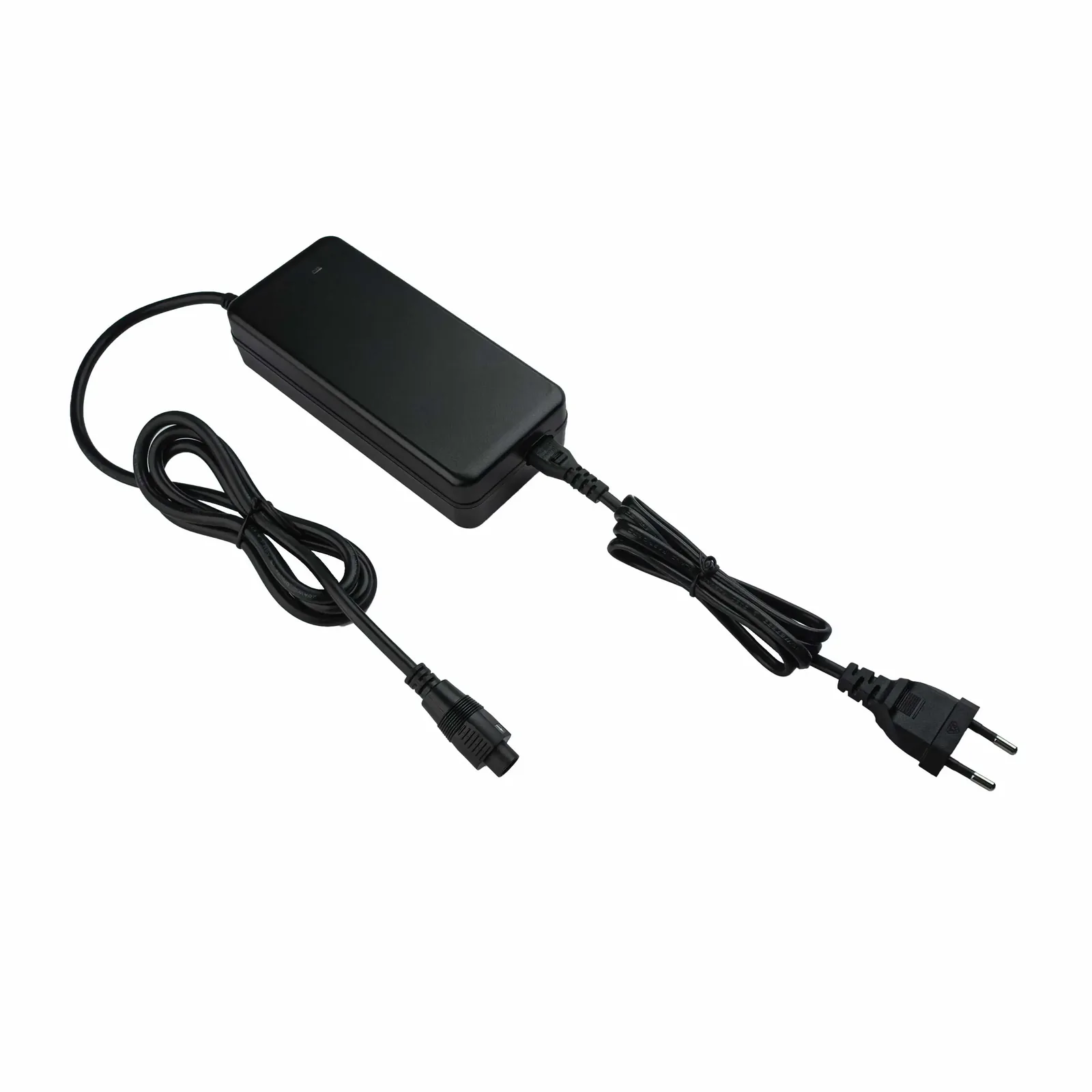
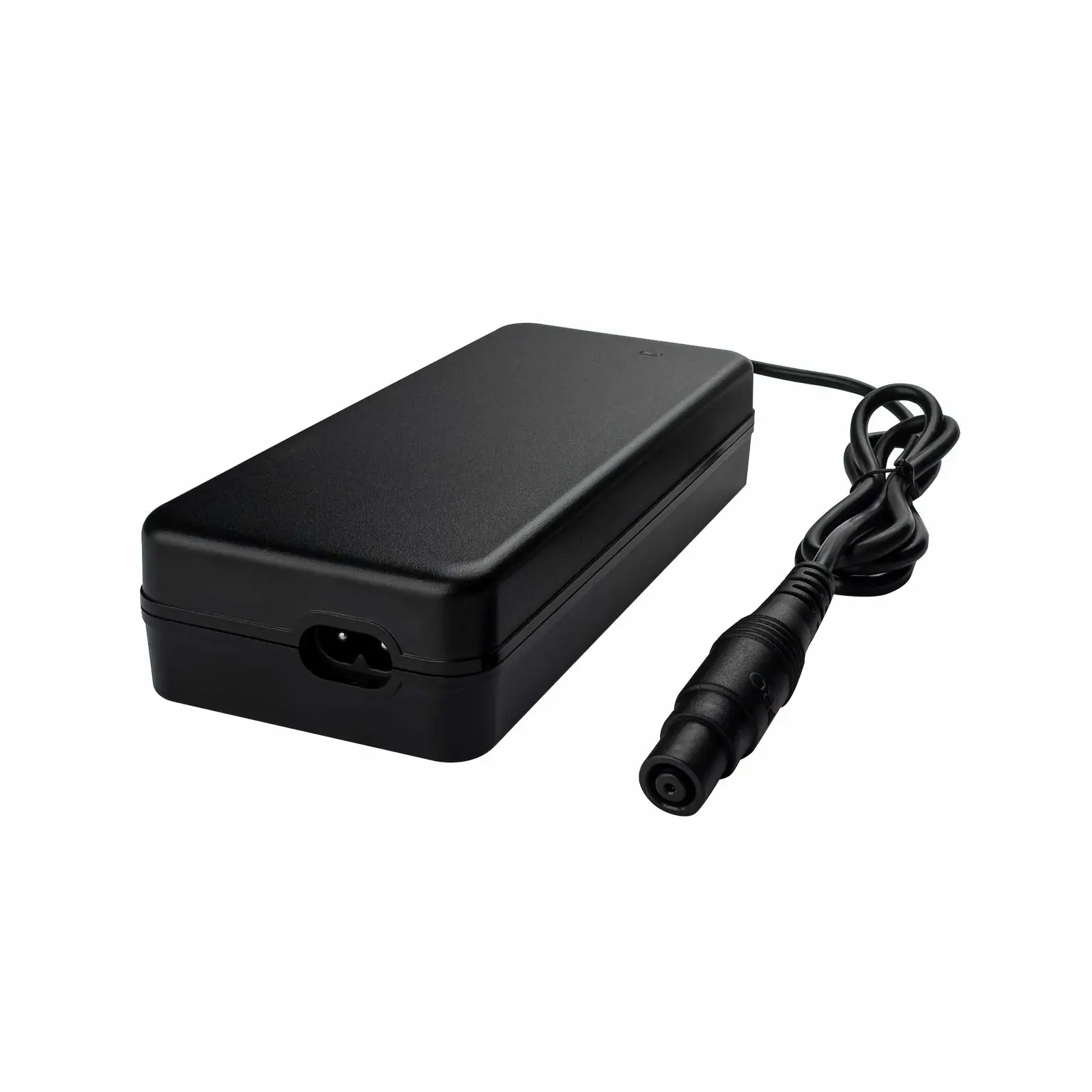
| 3-pin XLR | 48V/60V e-scooters, light EVs | 3 | Locking, secure connection |
| 4-pin XLR | 36V e-bikes (QWIC systems) | 4 | QWIC-compatible |
| Bosch oval plug | Bosch Active/Performance Line | 2+ | Bosch-specific shape |
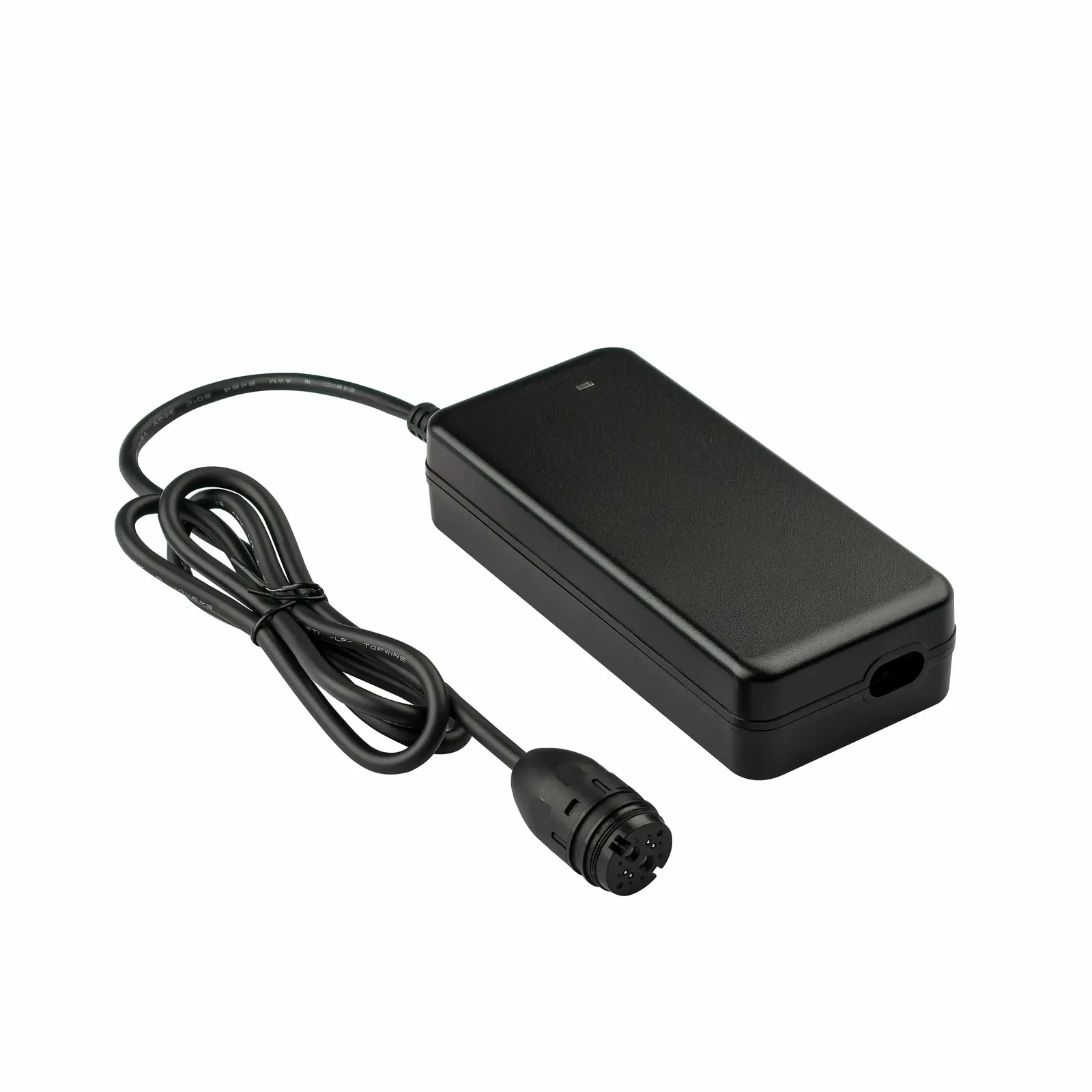
| Rosenberger | Premium e-bike systems | 3 | High-current, waterproof |
| DC barrel | Generic e-bikes/scooters | 2 | Size varies (5.5×2.1, 5.5×2.5) |
| XT60 | Industrial, AGV, custom packs | 2 | High-current, soldered |
| Aviation plug | Industrial, marine | Multi | Waterproof, locking |
Critical: Even within “XLR”, the pin arrangement and polarity can differ between manufacturers. A 3-pin XLR from brand A may not work with brand B’s battery port even if it physically fits.
What to send your supplier before ordering:
-
Photo of the original charger label (shows output voltage/current)
-
Photo of the charging port on the battery
-
Photo of the original connector
-
Pin/polarity diagram if available
At Juxon, we always request these before confirming a B2B order. This step alone eliminates most compatibility returns.
5. Charging Profile: CC/CV Is Standard, but Verify
Most lithium battery chargers use CC/CV (Constant Current / Constant Voltage) profile:
- CC phase: Charger delivers rated current until battery reaches full-charge voltage
- CV phase: Charger holds full-charge voltage while current tapers down
- Cutoff: Charging stops when current drops below a threshold (typically 0.1C)
This is what our 42V, 54.6V and 67.2V chargers all use. It is the correct profile for both Li-ion and LiFePO4 — but the CV voltage differs (see Section 1).
For lead-acid batteries, the profile is different (multi-stage: bulk/absorption/float). Do not use a lead-acid charger on a lithium pack, even if the voltage matches. The float stage can keep pushing current into a full lithium cell, causing damage.
B2B verification: Ask the supplier to confirm the charging profile in writing. “CC/CV with no float stage” is what you want for lithium.
6. Protection Functions: Non-Negotiable for B2B
A B2B charger must have these protections to pass QC and avoid field failures:
| Protection | Abbreviation | What It Does |
|---|---|---|
| Over-voltage protection | OVP | Stops if output exceeds safe limit |
| Over-current protection | OCP | Limits current to rated value |
| Short-circuit protection | SCP | Cuts output if short detected |
| Over-temperature protection | OTP | Shuts down if internal temp too high |
| Reverse polarity protection | RP | Protects if battery connected backwards |
All Juxon chargers include OVP/OCP/SCP/OTP as standard. The 500W platform adds reverse polarity protection, which is essential for OEM equipment integration where installer error is possible.
For OEM/ODM projects: Specify protection requirements in the technical agreement. If the charger integrates into equipment that may have user-swappable batteries, reverse polarity protection is mandatory.
7. Certification: Match to Your Target Market
Certification is a market-access requirement, not optional. Selling uncertified chargers into regulated markets risks customs seizure and liability.
| Market | Required Certification | Notes |
|---|---|---|
| EU | CE, RoHS, UKCA (UK) | Mandatory for EU/UK sales |
| US | UL or ETL, FCC | UL most recognized by retailers |
| Japan | PSE | Mandatory, strict enforcement |
| Australia | SAA / RCM | Required for AU market |
| Global | CB scheme | Interim, may speed local certs |
Our chargers carry CE/FCC/RoHS/UKCA as standard, with UL and GS available as options. For Japan-specific projects, PSE certification can be arranged — discuss this in your inquiry if JP is your target market.
B2B sourcing tip: If you distribute to multiple countries, order chargers with the broadest cert set (CE + RoHS + UKCA + FCC minimum) and request test reports, not just a certificate copy. Customs in DE, FR and NL increasingly ask for test reports.
Quick Checklist: What to Send Your Charger Supplier
Before requesting a quote, prepare this information to get an accurate quote fast:
- Battery chemistry (Li-ion / LiFePO4 / lead-acid)
- Battery nominal voltage and full-charge voltage (or cell config like 13S)
- Battery capacity (Ah) and desired charge current (A)
- Connector type (or photos of original + port)
- AC plug standard (EU/US/UK/AU/JP)
- Target market (determines certification)
- Estimated annual quantity
- Label/packaging requirements (neutral, your brand, OEM)
FAQ
Q1: Can I use one charger model for both Li-ion and LiFePO4 batteries?
No, not if the voltages differ. A 48V Li-ion pack needs 54.6V; a 48V LiFePO4 pack needs 58.4V. However, configurable platforms like our 500W charger can be set to different voltages at the factory for different chemistries — specify this in your OEM order.
Q2: What happens if I use a lead-acid charger on a lithium battery?
The float stage in lead-acid chargers can overcharge lithium cells, causing capacity loss, swelling or fire risk. Always use a CC/CV charger without float for lithium.
Q3: How do I know if a 42V charger is right for my 36V e-bike battery?
42V is the correct full-charge voltage for a 10S Li-ion pack (nominal 36V). Verify your battery label says “36V Li-ion” and the original charger output is 42V. Also confirm the connector matches.
Q4: What is the difference between 2A and 4A chargers for the same 42V output?
Voltage must match the battery; current determines charge speed. A 2A charger takes roughly twice as long as a 4A charger for the same battery. Choose 2A for standard overnight charging, 4A for fleet/rental fast turnaround.
Q5: Do your chargers support OEM labeling and custom packaging?
Yes. We offer full OEM/ODM including logo printing, custom labels, retail packaging, cable length, AC plug and connector customization. Minimum order quantities apply — contact us for details.
Ready to Source the Right Lithium Battery Charger?
Getting the spec right before you order saves weeks of returns and after-sales issues. Send us your battery spec, connector photo and target market — we will confirm the correct charger configuration and provide a quote within 24 hours.
- Request a quote: contact form
- Browse e-bike chargers: 42V Bosch-compatible · 42V QWIC-compatible
- Browse scooter chargers: 54.6V 48V · 67.2V 60V
- OEM/ODM platform: 500W 12V-72V configurable
Sample orders available for qualified B2B projects. 24-hour quote response. Factory-direct pricing from Dongguan, China.
*Juxon Technology — 30+ years manufacturing experience · 50,000 m² factory · 4,000+ charger models · CE/RoHS/UKCA/UL certified*
関連商品
すべてを見る →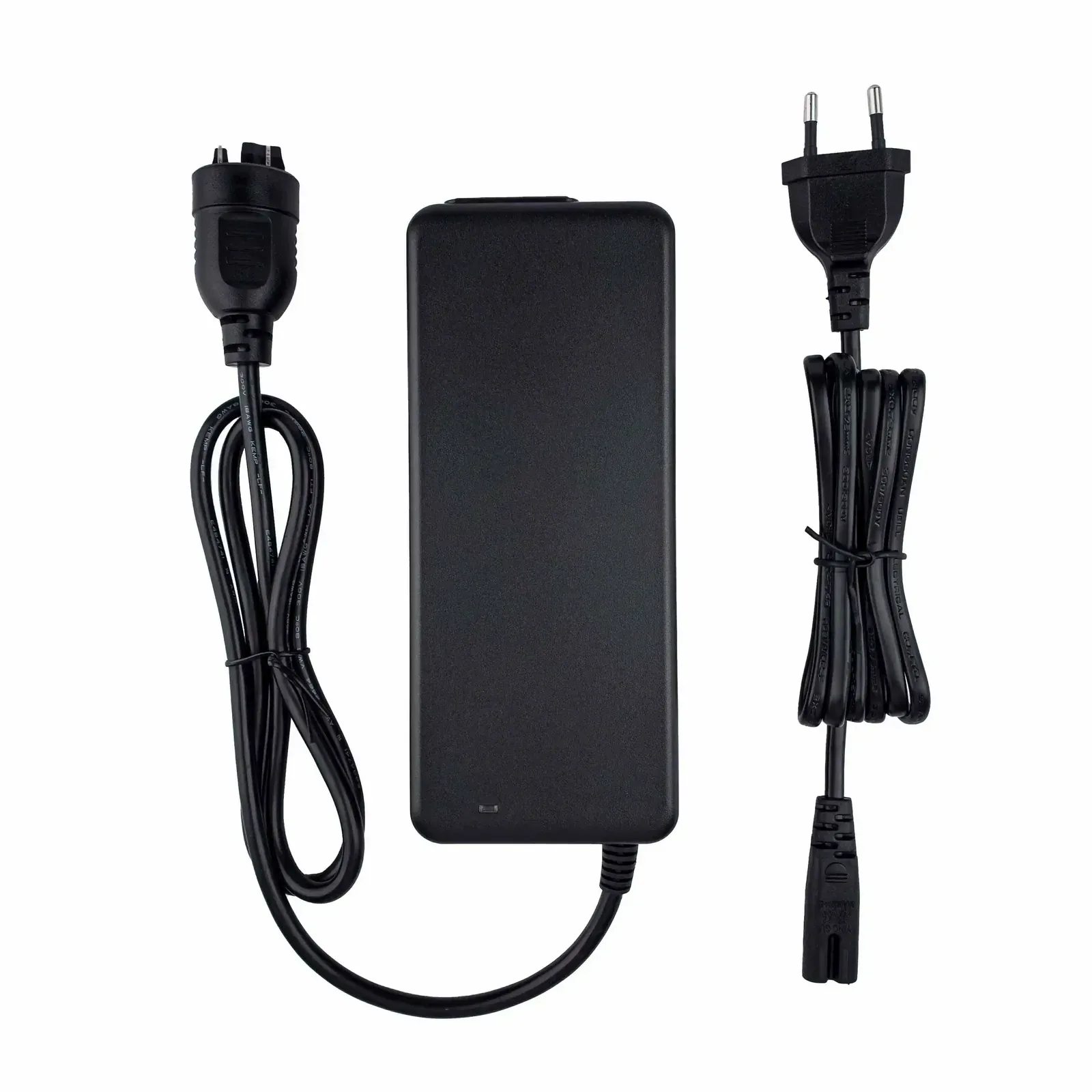
関連記事
すべてを見る →この用途に合う充電器が必要ですか? OEM/ODMのカスタム見積もりを依頼する
お見積もりを依頼する