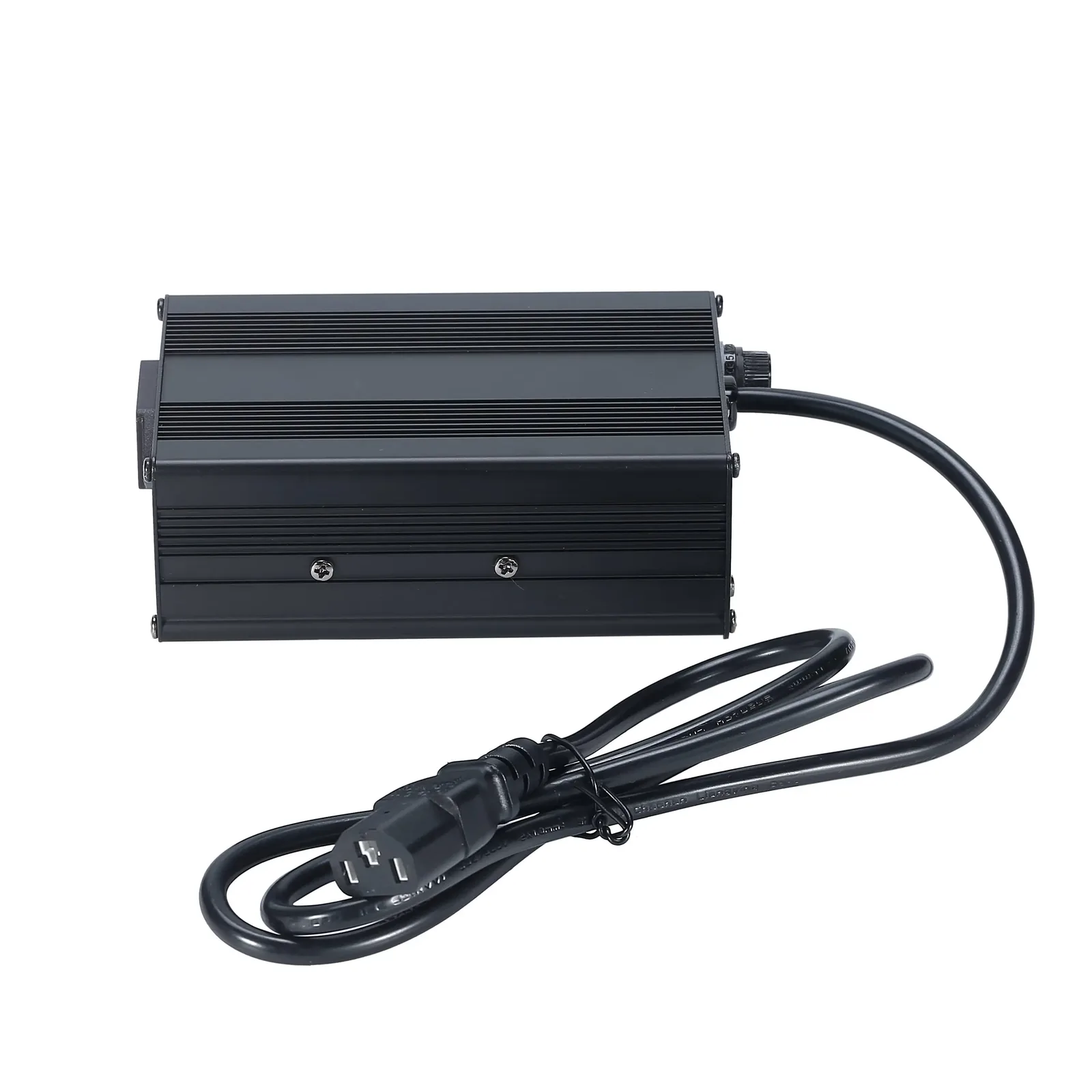
When sourcing battery chargers for resale or integration into your product line, regulatory certification is not optional — it is the gatekeeper to every major market. A charger that lacks UL listing cannot be sold through US retailers; one without the CE mark cannot legally enter the European Union. For OEM buyers and procurement managers, understanding these certification requirements early in the sourcing process prevents costly redesigns, shipment delays, and liability exposure.
This guide breaks down the essential safety and electromagnetic compatibility (EMC) certifications for battery chargers, explains what each mark covers, and provides a practical framework for evaluating whether your charger supplier can deliver fully compliant products.
Why Certification Matters for OEM Battery Chargers
Battery chargers operate at the intersection of electrical safety and lithium chemistry management. A faulty charger can overcharge cells, cause thermal runaway, or leak electromagnetic interference that disrupts nearby equipment. Regulators respond to these risks with mandatory standards that chargers must meet before they can be sold.
For OEM buyers, the stakes are especially high:
- Market access: Retailers and distributors in the US require UL listing; EU customs require the CE mark.
- Liability: An uncertified charger that causes property damage or injury exposes the seller — not just the manufacturer — to legal action.
- Brand protection: A recall triggered by non-compliant chargers damages brand trust far more than the direct cost of the recall.
- Insurance: Many commercial liability policies require that products carry recognized safety certifications.
UL Certification for the US Market
Underwriters Laboratories (UL) is the dominant safety certification body in the United States. While UL is technically a voluntary standard, market reality makes it effectively mandatory: major retailers like Amazon, Home Depot, and Grainger require UL listing for electrical products.
Key UL Standards for Battery Chargers
| Standard | Scope | Typical Products |
|----------|-------|-----------------|
| UL 60950-1 | IT equipment power supplies | Smart chargers, IoT device chargers |
| UL 62368-1 | Audio/video & IT equipment (successor to 60950-1) | Modern multi-chemistry chargers |
| UL 1310 | Class 2 power units | Low-power chargers (under 100 VA) |
| UL 1012 | Non-class 2 power units | High-power industrial chargers |
The transition from UL 60950-1 to UL 62368-1 (hazard-based safety engineering) is largely complete. New product submissions should target UL 62368-1 unless a legacy standard is specifically required by the buyer.
The UL Certification Process
- Application and quote: The manufacturer submits product specifications to UL or an NRTL (Nationally Recognized Testing Laboratory).
- Sample testing: UL tests production-representative samples for electrical safety, thermal performance, and fault conditions.
- Factory inspection: UL audits the manufacturing facility to verify quality controls.
- Listing and follow-up: Once listed, UL conducts periodic follow-up inspections to ensure ongoing compliance.
Typical timeline: 8–16 weeks for a new submittal, depending on complexity and the number of revisions required.
NRTL Equivalents
Under US law, any Nationally Recognized Testing Laboratory can issue an equivalent listing. Common NRTLs include ETL (Intertek), CSA, and TUV Rheinland. An ETL mark is legally equivalent to UL for US market access, though some buyers specifically request the UL mark.
CE Marking for the European Market
The CE mark indicates that a product conforms to all applicable EU directives. For battery chargers, the relevant directives are:
- Low Voltage Directive (LVD) 2014/35/EU: Covers electrical safety for equipment operating at 50–1000 V AC or 75–1500 V DC.
- Electromagnetic Compatibility (EMC) Directive 2014/30/EU: Ensures the charger neither emits excessive interference nor is unduly affected by external electromagnetic fields.
- RoHS 2 Directive 2011/65/EU: Restricts hazardous substances (lead, mercury, cadmium, etc.) in electrical equipment.
Harmonized Standards Under CE
Charger manufacturers typically self-declare conformity against these harmonized standards:
- EN 62368-1 (safety, aligning with IEC 62368-1)
- EN 55032 (EMC emissions)
- EN 55035 (EMC immunity)
CE Self-Declaration vs. Third-Party Testing
The CE mark is primarily a self-declaration regime: the manufacturer signs a Declaration of Conformity (DoC) and maintains a technical file. However, most reputable OEM charger manufacturers engage third-party labs (TUV, SGS, Intertek) to generate the test reports that substantiate the DoC. As a buyer, always request the test report and DoC — a CE mark without supporting documentation is a red flag.
FCC Compliance for the US Market
In addition to safety certification, battery chargers sold in the US must comply with FCC regulations governing electromagnetic emissions:
- FCC Part 15 Subpart B: Covers unintentional radiators (most switching-mode battery chargers fall here). Requires verification or Declaration of Conformity.
- FCC SDoC: Supplier's Declaration of Conformity has replaced the older FCC Verification pathway. The responsible party must have test records available for inspection.
For OEM buyers, confirming that your charger supplier holds valid FCC test reports is essential. A charger that fails FCC emissions testing can cause interference with radio communications and will be subject to FCC enforcement action.
How to Verify Your Charger Supplier's Certifications
Requesting certificates is not enough. Certification fraud is a known problem in the charger industry. Use this verification checklist:
- Cross-reference the certificate number with the issuing lab's online database (UL, ETL, TUV all provide lookup tools).
- Match the model number on the certificate to the exact product you are purchasing. Certificates that cover a "series" must explicitly list the variant.
- Check the validity date. Certificates expire, and standards are updated. A 2018 UL listing under UL 60950-1 may need re-testing under UL 62368-1.
- Request the full test report, not just the certificate page. The report reveals which tests were performed and whether any were waived or conditional.
- Confirm factory audit status. UL and other NRTLs require follow-up inspections. Ask for the most recent audit date.
Choosing a Certified Charger Manufacturer
Working with a manufacturer that already holds certifications for the charger families you need dramatically reduces your time to market. JuxonPower maintains UL, CE, FCC, and RoHS certifications across its charger portfolio, covering lithium-ion, LiFePO4, and lead-acid chemistries from 12 V to 120 V and 1 A to 100 A.
For example, the Juxon010-300A 24V 30A LiFePO4 charger ships with CE, FCC, and RoHS documentation, making it ready for integration into EU-bound equipment. The Juxon010-84A 12V 7A multi-chemistry charger provides a compact certified solution for smaller applications.
When evaluating suppliers, prioritize those who can:
- Provide copies of all relevant test reports before purchase
- Support custom labeling with your brand while maintaining the certification chain
- Offer pre-compliance testing for modified designs
- Handle re-certification when standards are updated
For a deeper understanding of the certification landscape, see our Battery Charger Certification Guide.
Reducing Certification Risk in OEM Projects
The most common mistake OEM buyers make is treating certification as a final checkbox rather than a design input. By the time a charger fails safety testing, the mechanical integration, cable routing, and even the enclosure may need rework. To minimize this risk:
- Specify certification requirements in your RFQ. State the target markets and required marks upfront.
- Choose a pre-certified charger platform whenever possible. Modifying an existing certified design is far less risky than certifying a new one.
- Involve compliance early. Share your end-product certification timeline with the charger manufacturer so they can align their testing schedule.
- Budget for certification. If a custom charger design is necessary, factor 8–16 weeks and $10,000–$30,000 for UL/CE testing into your project plan.
When You Need Multiple Certifications
Many OEM buyers serve both US and EU markets simultaneously. In this case, your charger needs both UL (or NRTL) listing and CE marking, plus FCC compliance. The good news is that IEC 62368-1 is recognized under both UL and EN standards, so a single test campaign at an accredited lab can often generate reports for both markets. Look for a manufacturer that uses CB (Certification Body) scheme testing to streamline multi-market certification.
Ready to discuss certification requirements for your specific application? Contact our engineering team — we can advise on the right charger platform and certification path for your project.
FAQ
Q: Is the CE mark accepted in the United States?
A: No. The CE mark is a European conformity indicator and has no legal standing in the US. To sell battery chargers in the US, you need UL listing (or an equivalent NRTL listing such as ETL) and FCC compliance.
Q: How long does UL certification for a battery charger take?
A: A typical new UL submittal takes 8–16 weeks, including testing, any required design revisions, and the initial factory inspection. Using a pre-certified charger platform eliminates this timeline entirely.
Q: Can I put my own brand on a UL-certified charger made by another manufacturer?
A: Yes, under certain conditions. The charger must be listed under the original manufacturer's UL file, and your company may be added as a private labeler. The UL follow-up service will audit the arrangement. Always confirm the private-label process with the certifying lab before proceeding.
Q: What happens if my charger fails FCC emissions testing?
A: The charger cannot be legally marketed in the US. You will need to modify the design (typically adding shielding or filtering components) and re-test. This is one reason to work with a manufacturer that already holds valid FCC test reports for the charger family.
Q: Do I need separate certification for different battery chemistries?
A: If the charger's electrical design differs between chemistry variants (e.g., different charge algorithms, voltage ranges, or current limits), each variant may require separate testing. A modular charger platform that shares the same power stage across chemistries can often be certified as a series, reducing cost and time.