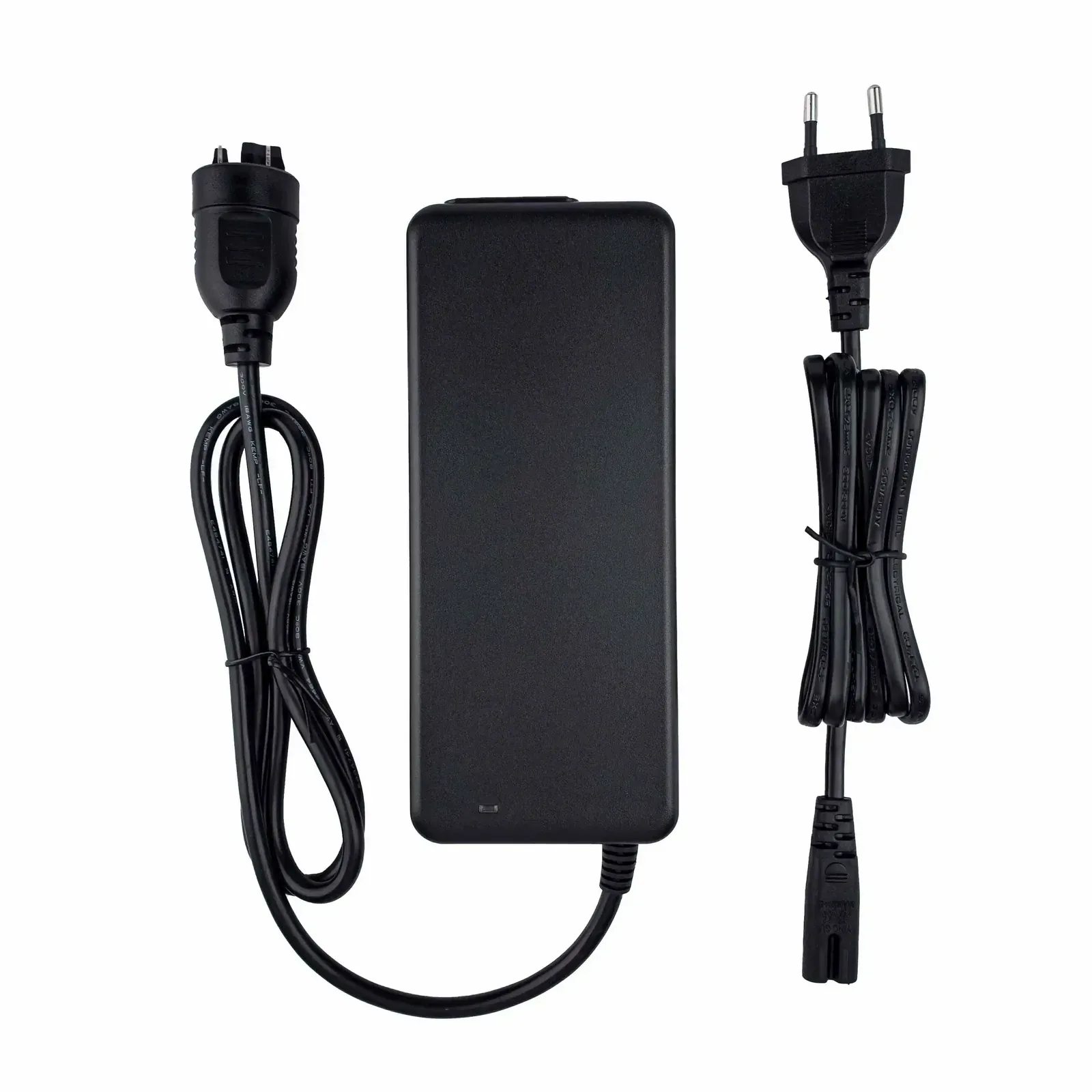
Why a Lithium Battery Charger Stops Charging
When a lithium battery charger refuses to charge, the root cause is almost never that the battery is simply dead. In the large majority of field cases the charger is protecting the pack, or the specification does not match the battery chemistry. JUXON Power, a Shenzhen-based lithium battery charger manufacturer, sees the same six failure patterns across AGV, e-bike, forklift and marine deployments. This guide explains each cause and how to specify a charger that avoids it from the start.
1. Chemistry Mismatch (LiFePO4 vs NMC vs Lead-Acid)
A 12V lead-acid charger will not correctly charge a 12.8V LiFePO4 pack, and an NMC profile will overcharge a LiFePO4 cell. Lithium chemistry dictates a precise constant-current / constant-voltage (CC/CV) curve and a strict cutoff voltage. The single most important purchase step is to specify the exact cell chemistry in writing. See the battery chemistry explainer for the marks your export model needs. As a rule, a LiFePO4 cell tops out at 3.65V and a 4-cell pack at 14.6V, while an NMC cell reaches 4.2V and a 4-cell pack 16.8V. A charger built for one chemistry will never satisfy the other, and the BMS will disconnect long before any useful charge occurs.
2. Connector or Polarity Fault
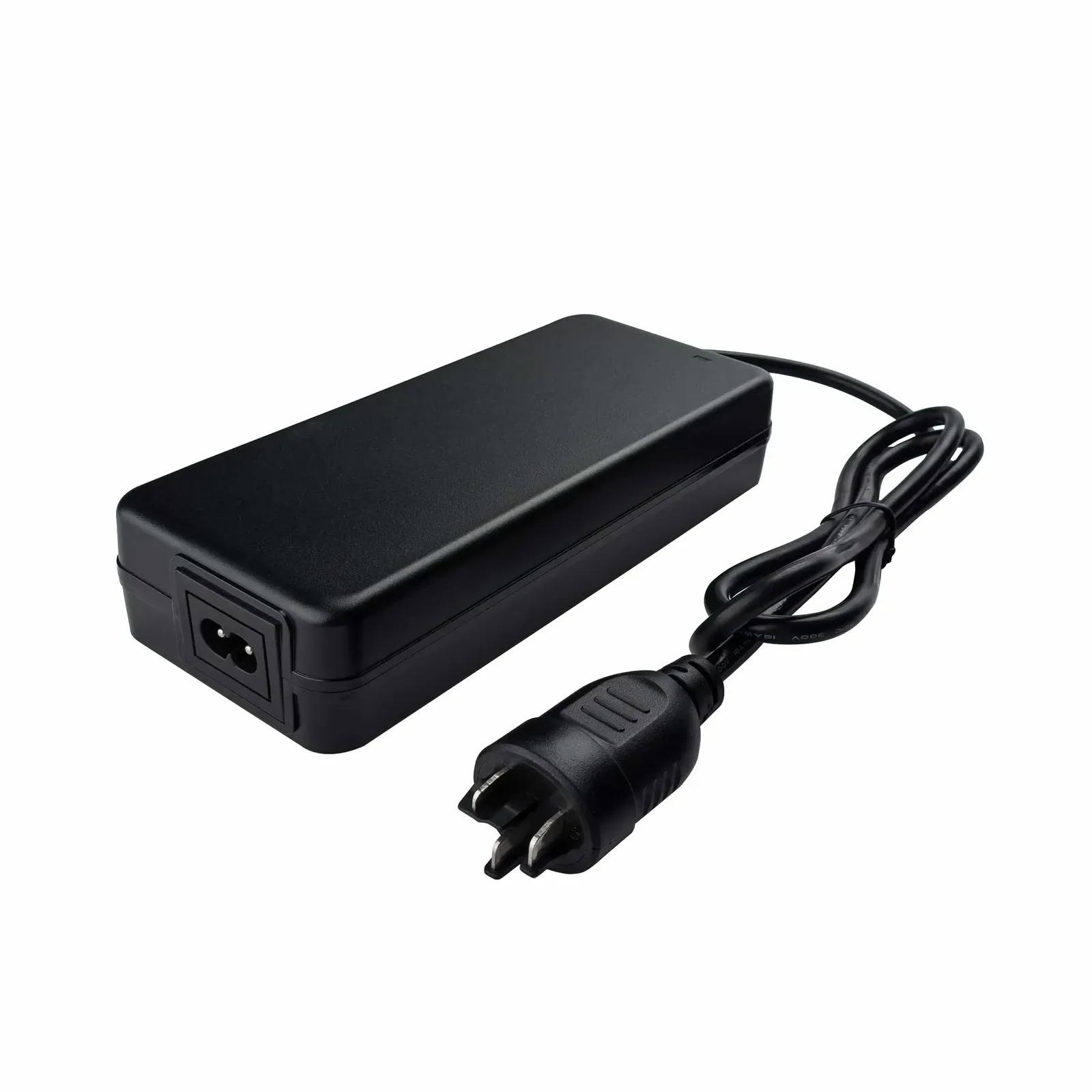
A loose XLR, M16/GX16, or Anderson connector drops voltage and trips the charger's protection lockout. Bent pins and reversed polarity are the second most common cause of a no-charge condition. Always confirm the connector type and pin definition before shipment, and label both ends. Our connector guide covers the common e-bike and industrial interfaces.
3. Overheating and Thermal Cutoff
Chargers throttle or shut down above their rated ambient temperature. Poor ventilation, sealed cabinets, or direct sunlight push the MOSFET past its limit and the unit drops to a safe state with no output. Size for 20 to 30 percent headroom and provide airflow. An IP65 waterproof charger helps in dusty or wet sites but does not replace ventilation. As a rule of thumb, derate the charger by about 30 percent in ambient above 40C; a unit rated for full load at 25C may deliver only half current inside a sealed enclosure on a summer roof.
4. Missing or Faulty BMS Communication
Smart packs use CAN bus or RS485 to handshake with the charger. If the BMS does not answer, the charger holds at pre-charge and never reaches CC. Confirm the communication protocol (CAN 2.0B, RS485) matches the pack, and that the BMS is awake. The CAN bus guide explains the wiring a technician should expect.
5. Weak Build Quality and Component Drift
Cheap chargers drift out of spec within a season: the voltage reference wanders, the fan fails, the relay welds closed. A failing unit may show a green light while delivering no current. Choose a manufacturer with IQC, IPQC and OQC plus full-load burn-in. The manufacturer selection checklist lists the documents to request before signing.
6. Input Power or Surge Problem
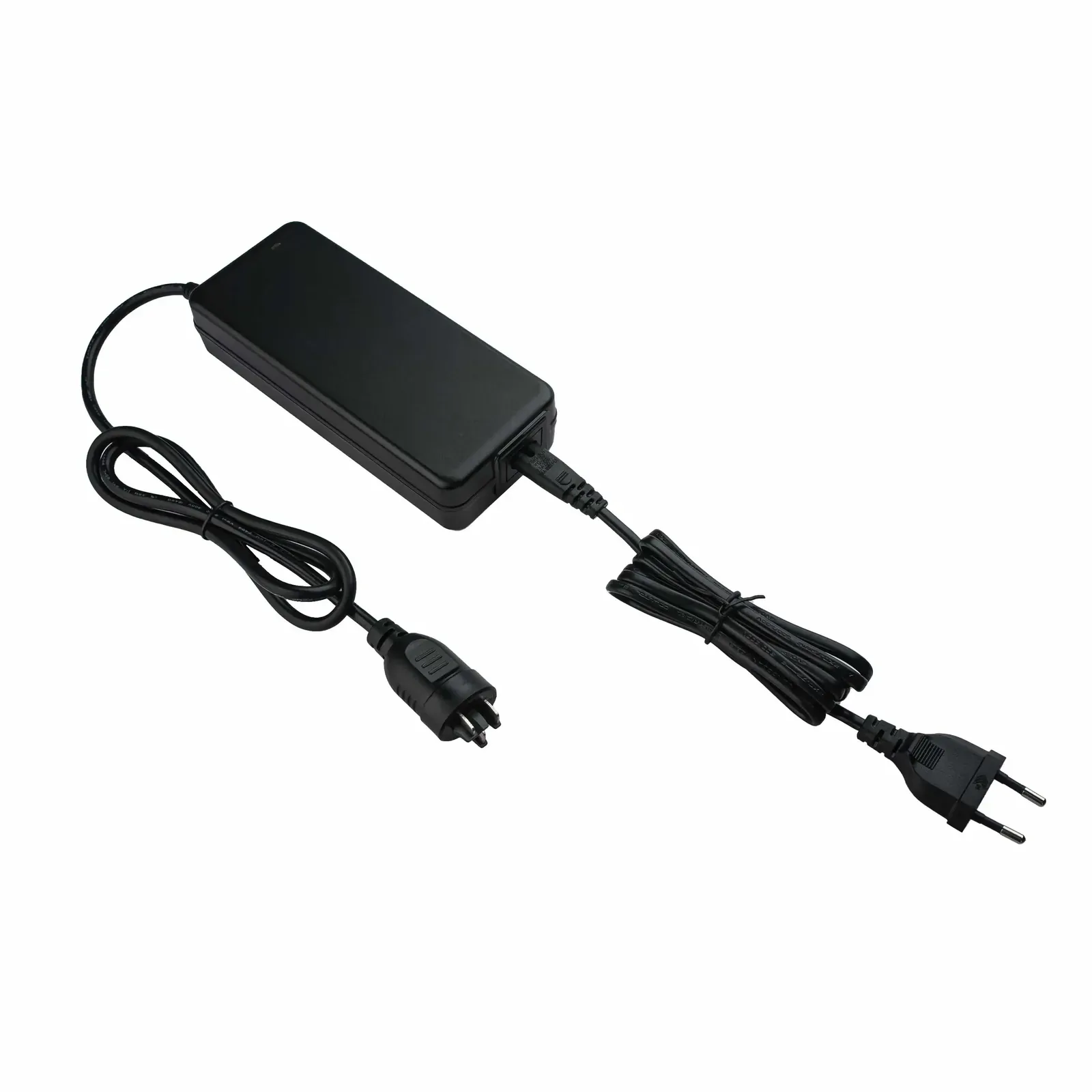
A sagging 110V line, a miswired neutral, or an unprotected surge at the site prevents the PFC stage from starting. Use a charger with active PFC and specify input tolerance (90 to 264V) for unstable grids. For 48V fleets, the 48V charger guide shows how input range affects uptime.
How to Specify a Charger That Always Charges
- Match chemistry and nominal voltage exactly (LiFePO4 14.6V, NMC 16.8V for a 12V-class pack).
- Confirm connector, polarity and pin definition in writing.
- Require CAN bus or RS485 where the pack is smart.
- Demand IQC, IPQC, OQC test reports and full-load burn-in.
- Choose active PFC with a wide input range.
Before a production run, validate with a sample on your actual pack: confirm the charger reaches CV, holds the cutoff for the required taper, and that the BMS reports a completed cycle. Request the test report from the manufacturer so the result is documented, not assumed.
Comparison: What a Reliable Charger Includes
A reliable lithium charger differs from a generic one in five ways: owned CC/CV firmware, model-specific certifications (CE, UL, FCC), a communication handshake, documented quality control, and real OEM or ODM flexibility. Browse the JUXON charger catalog to see configurable ranges from 48W to 8000W, or read the buying guide before you quote.
Field Checklist Before You Call It Broken
When a charger shows no output, work top-down. Measure pack voltage at the connector, confirm the input supply is within tolerance, check the fuse and the fan, then swap in a known-good unit. Most no-charge calls are resolved at the connector or the input, not inside the charger itself.
Frequently Asked Questions
Why does my LiFePO4 charger stop at 80 percent? A 12V-class LiFePO4 pack rests near 13.6V; if the charger is set for lead-acid absorption it may terminate early. Use a LiFePO4 profile so the charger reaches its 14.6V cutoff.
Can I use a 48V charger on a 36V pack? No. A 48V (54.6 to 58.4V) charger will overvoltage a 36V (42 to 43.8V) pack and trip protection or damage cells. Always match pack voltage.
How do I know the charger is the problem, not the battery? Swap in a known-good charger; if the pack then charges, the original unit has drifted or its BMS handshake failed.
When should I ask for OEM or ODM? When your pack is non-standard in voltage, connector, firmware or enclosure. See the OEM and ODM guide and the manufacturer selection checklist.