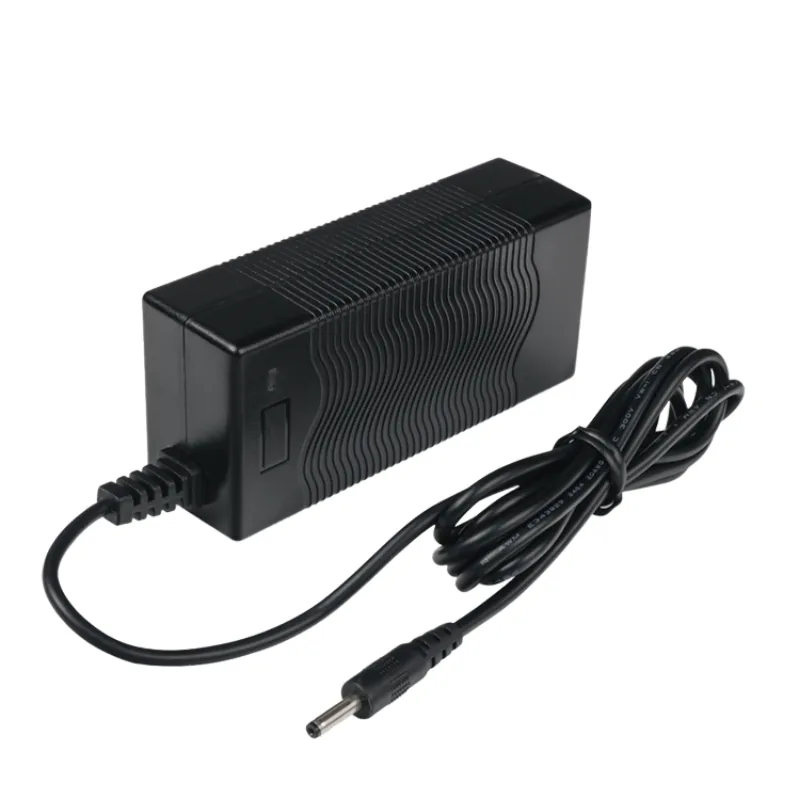
Lithium iron phosphate (LiFePO4) and lead-acid batteries dominate stationary and mobile power, but they charge in fundamentally different ways. Using the wrong charger is a common and costly mistake.
Lead-acid batteries - flooded, AGM, and gel - are typically charged with a three-stage profile: bulk, absorption, and float. The charger pushes constant current until voltage reaches the absorption setpoint, holds that voltage while current tapers, then drops to a lower float voltage to maintain the battery indefinitely. This profile compensates for lead-acid tendency to sulfate and gas.
LiFePO4 batteries use a constant-current / constant-voltage (CC/CV) profile. The charger delivers steady current until it reaches the pack charge voltage, then holds voltage while current decays to a cutoff threshold, usually around 5 percent of capacity, and stops. There is no float stage; trickle-charging a lithium cell degrades it.
The danger is real: a lead-acid charger left on a lithium pack can drive cell voltage past the safe limit, risking thermal runaway. Conversely, a lithium charger may never complete a proper lead-acid equalization, leaving capacity on the table.
When specifying, always choose a charger explicitly profiled for your chemistry. Many modern industrial chargers support switchable chemistry profiles, letting one unit serve both types with a configuration change. If you operate mixed fleets, ask about multi-chemistry support, certification, and connector options. Our team can help you select or custom-build a charger matched to your exact battery chemistry and pack voltage.