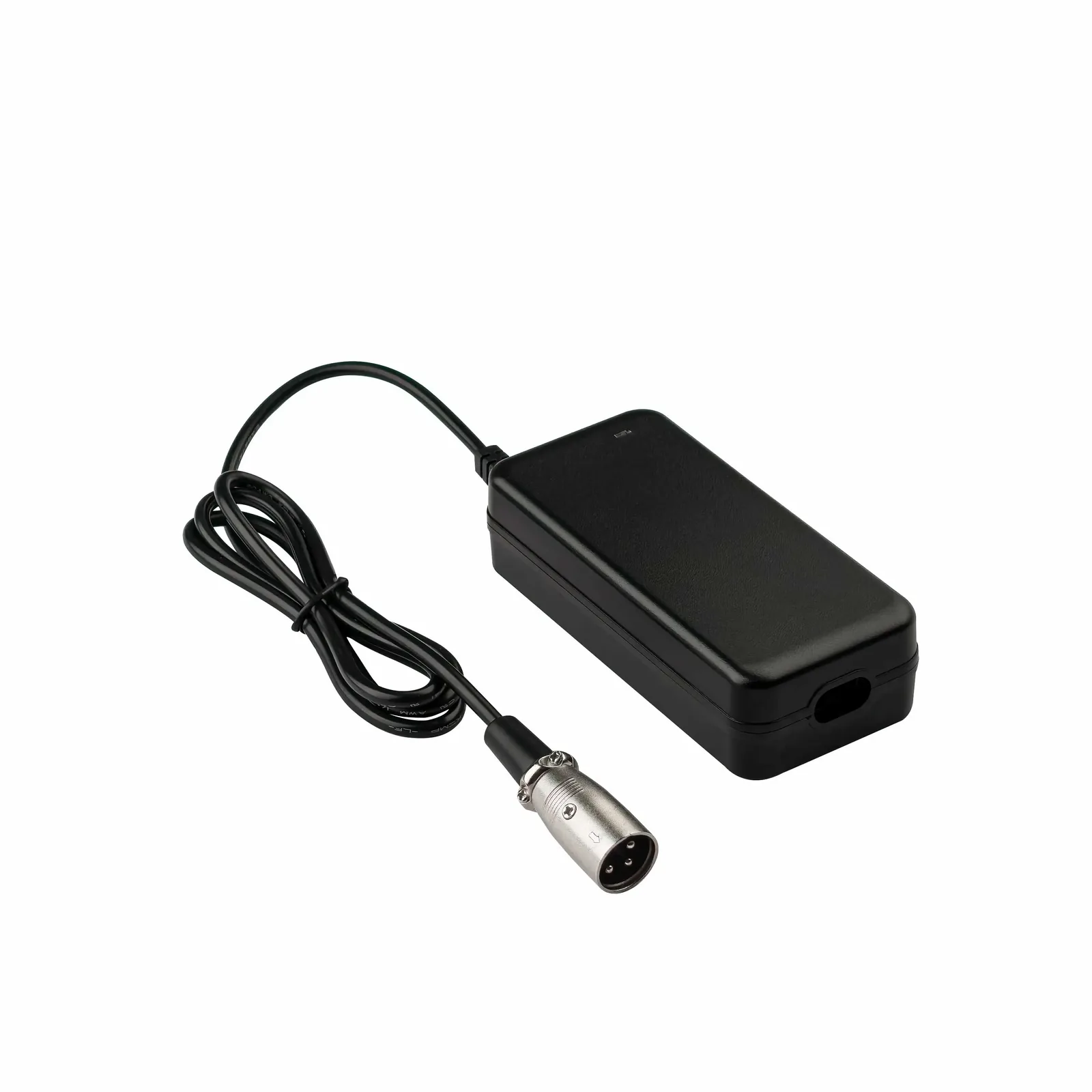
When your battery charger lives outside — on a boat deck, inside an AGV bay, or mounted on a solar enclosure — water and dust are not theoretical risks. They are daily realities that destroy unprotected electronics and void warranties. An IP65 waterproof battery charger is the minimum specification most OEMs require for outdoor and marine deployments, yet many buyers confuse the rating with broader protection levels or overlook the mechanical details that actually keep water out.
This guide explains what IP65 really means, how it differs from IP54 and IP67, which applications demand it, and what to verify before you commit to a supplier.
What Does IP65 Actually Mean?
The IP (Ingress Protection) code is defined by IEC 60529. The first digit rates protection against solid objects and dust; the second digit rates protection against water.
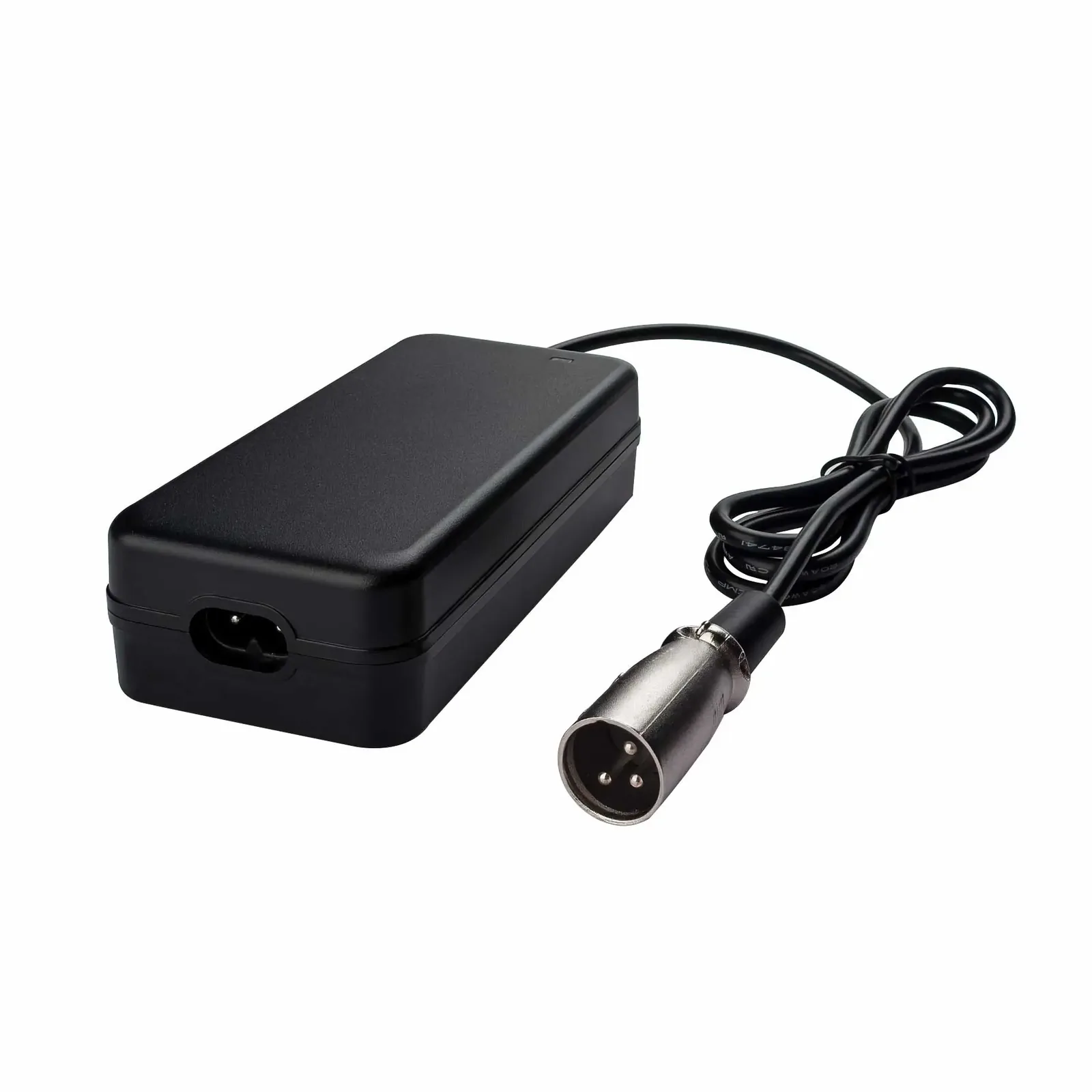
- 6 (dust-tight): No ingress of dust whatsoever. Complete protection against contact.
- 5 (water-jet protected): Water projected by a 6.3 mm nozzle against the enclosure from any direction shall have no harmful effects.
In practical terms, an IP65 charger can survive rain, hose-downs, and splashing — but not temporary immersion. If your product may be submerged even briefly (e.g., a marine charger mounted near the waterline), you need IP67 or higher.
| IP Rating | Dust | Water | Typical Use Case |
|----------|------|-------|-----------------|
| IP54 | Limited dust ingress | Splashing water | Indoor industrial, sheltered cabinets |
| IP65 | Dust-tight | Water jets (rain, hose) | Outdoor, marine deck, AGV bays |
| IP67 | Dust-tight | Temporary immersion (1 m / 30 min) | Marine below-deck, flood-prone sites |
| IP68 | Dust-tight | Continuous immersion | Subsea, underwater robotics |
Applications That Demand IP65 Protection
Marine and RV
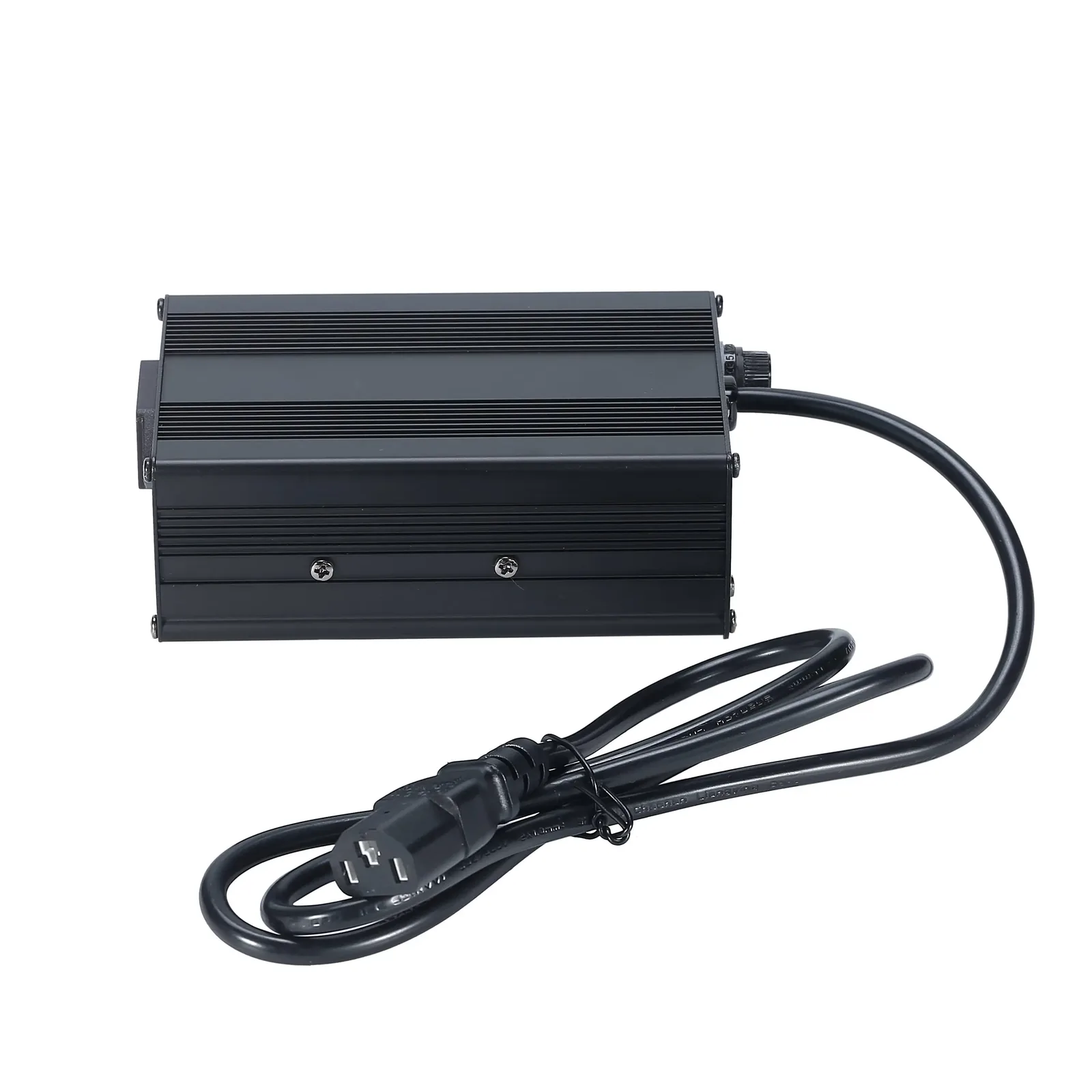
Boat and RV battery systems are exposed to salt spray, deck wash-downs, and condensation. A charger that is merely "weather-resistant" will corrode internally within months. IP65 ensures the unit survives routine cleaning and rough weather without internal damage. For installations below the waterline or in bilge areas, consider IP67.
AGV and Mobile Robotics
Automated guided vehicles operate in warehouses, factories, and outdoor yards. Charging stations are often exposed to rain or industrial wash-down cycles. An IP65-rated AGV battery charger protects the charging contact area and internal electronics from both dust accumulation and direct water jets.
Outdoor Solar and ESS
Solar energy storage systems in remote locations face rain, humidity, and dust storms. The charger must operate reliably for years without a climate-controlled enclosure. IP65 is the baseline; some sites may need IP67 for monsoon-prone regions.
Mobility and Medical Equipment
Mobility scooters and medical devices used outdoors require chargers that survive rain during charging stops. Regulatory frameworks in the US (UL) and EU (CE) increasingly reference IP ratings for outdoor medical equipment.
How to Verify Real IP65 Compliance
Not every charger labeled "IP65" actually meets the standard. Here is what to check:
- Test report: Request the IEC 60529 test report from the manufacturer. A legitimate supplier will provide it without hesitation.
- Sealed connectors: The cable entry points are the most common failure. Look for cable glands or molded connectors rated to the same IP level as the enclosure.
- Venting: Some chargers use a breathable membrane (Gore-Tex or equivalent) to equalize pressure while blocking water. Verify the membrane is present and correctly installed.
- Enclosure integrity: Check that the housing has no unsealed screw holes, gaps at seams, or thin-wall sections that could deform under pressure.
- Production consistency: A sample may pass; a production batch may not. Ask about production-line IP testing protocols.
IP65 Charger Design Features That Matter
Beyond the rating itself, several design choices determine whether an IP65 charger survives years of outdoor service:
- Potting or conformal coating on the PCB prevents moisture-related tracking and corrosion even if a small amount of condensation forms inside.
- Stainless-steel or corrosion-resistant hardware on the enclosure exterior resists salt-spray degradation.
- Thermal management must work without large ventilation openings. Look for heatsink-based cooling or sealed aluminum extrusions rather than fan-cooled designs with open vents.
- Cable strain relief at entry points prevents the seal from being pulled loose over years of vibration and movement.
Specifying an IP65 Charger for Your Application
When you issue an RFQ for a waterproof charger, include these details to get accurate proposals:
- Battery chemistry and voltage: LiFePO4 (12.8 V / 25.6 V / 51.2 V), lead-acid, or other. The charge profile must match.
- Charge current: Determine the required charge rate based on battery capacity and available charge time.
- Operating temperature range: Outdoor chargers may face −20 °C to +50 °C or wider. Confirm the charger is rated for your extremes.
- Connector type: Anderson, XLR, or custom. The connector must also be IP-rated if it is exposed. See our connector compatibility guide for details.
- Certifications: For the US market, UL/ETL listing; for the EU, CE marking with the Low Voltage Directive and EMC Directive. Both are covered in our UL & CE certification guide.
- Cable length and routing: Specify whether the AC input and DC output cables exit the same face or opposite faces, and the required lengths.
Common Mistakes When Buying Waterproof Chargers
- Assuming IP65 covers immersion: It does not. A charger dropped in a puddle may fail. Specify IP67 if immersion is possible.
- Ignoring connector IP rating: A IP65 enclosure with an IP20 connector is only as waterproof as the connector.
- Overlooking condensation: Even with perfect external sealing, temperature cycling creates internal condensation. Potting or conformal coating is essential.
- Choosing fan-cooled designs: Fans require ventilation openings that compromise the IP rating. Heatsink-cooled designs are inherently more sealable.
Why Juxon Power IP65 Chargers
Juxon Power manufactures a range of IP65-rated LiFePO4 and lead-acid chargers designed for outdoor and marine OEM applications. Key features include:
- Sealed aluminum enclosures with integrated heatsinks — no fans, no ventilation gaps.
- Cable glands rated IP65 on both AC input and DC output.
- Conformal-coated PCBs for long-term moisture resistance.
- UL and CE certified models for the US and European markets.
- Custom labeling and connectors available for OEM branding.
Explore our waterproof charger lineup or visit the Knowledge Center for more technical guides on charger selection and certification.
Ready to specify an IP65 charger for your next project? Contact our engineering team to discuss your application requirements, connector preferences, and certification needs. We respond within 24 hours with a tailored proposal.
FAQ
Q: Is IP65 enough for a marine battery charger?
A: IP65 is sufficient for deck-mounted chargers exposed to rain and spray. If the charger may be temporarily submerged (e.g., mounted near the waterline or in a bilge), specify IP67 instead.
Q: Can an IP65 charger be used in direct rain?
A: Yes. IP65 protects against water jets equivalent to heavy rain and hose-downs. However, the charger should be mounted with cables facing downward to prevent water pooling at cable entries.
Q: What is the difference between IP65 and IP67 for battery chargers?
A: IP65 protects against water jets from any direction; IP67 adds protection against temporary immersion up to 1 meter for 30 minutes. IP67 is recommended for flood-prone or below-deck marine installations.
Q: Do I need a special connector for an IP65 charger?
A: Yes. The connector must be rated to at least the same IP level as the charger enclosure. Standard exposed Anderson or XLR connectors are typically IP20 and will compromise the seal. Use sealed connector variants or route connections inside a protected enclosure.
Q: How does potting improve waterproof charger reliability?
A: Potting fills the internal cavity with a resin that prevents moisture ingress, condensation damage, and vibration-induced failures. It is especially important for chargers that experience wide temperature swings, which can cause internal condensation even in sealed enclosures.