Why Cold-Weather Charging Is Different for LiFePO4
If your equipment runs outdoors in the United States or the United Kingdom, you will eventually face the same question: can you charge a LiFePO4 battery in cold weather? The short answer is that LiFePO4 cold weather charging has a hard limit — most lithium iron phosphate cells must not be charged below 0°C (32°F). Cross that line and you risk permanent, irreversible damage. This guide explains the chemistry behind the rule, why a low-temperature cut-off matters, and how to specify a charger that protects your battery bank when the temperature drops.
What Actually Happens Inside the Cell Below Freezing
Inside a LiFePO4 cell, charging moves lithium ions from the cathode back into the graphite anode. At room temperature this is a smooth, reversible process. Below 0°C the ions slow down and, critically, can plate onto the anode surface as metallic lithium instead of intercalating into the graphite. This lithium plating is irreversible: it permanently reduces usable capacity, raises internal resistance, and in severe cases creates dendritic growth that can puncture the separator and cause an internal short.
Lead-acid chemistry behaves differently — in fact, lead-acid batteries often *need* a higher charge voltage in the cold — which is exactly why a charger tuned for one chemistry is unsafe for the other. See our Knowledge Center for the full lithium-vs-lead-acid charging breakdown.
The 0°C (32°F) Rule Every Buyer Should Know
For consumer and industrial LiFePO4 cells, the widely accepted charging limit is 0°C / 32°F. Discharging is far more tolerant — most cells deliver rated capacity down to about −20°C. But charging is the vulnerable operation:
- Above 0°C: normal constant-current / constant-voltage (CC-CV) charging is safe.
- 0°C to −10°C: charging should be disabled or heavily current-limited unless the cell is explicitly rated for low-temperature charge.
- Below −10°C to −20°C: charging must be fully disabled on standard cells.
Some premium cells rated for "low-temp charge" can accept a reduced current (often around 0.05C–0.1C) down to −10°C or −20°C, but this is a cell-level specification — never assume a generic LiFePO4 pack supports it.
How a Safe Cold-Weather Charger Works
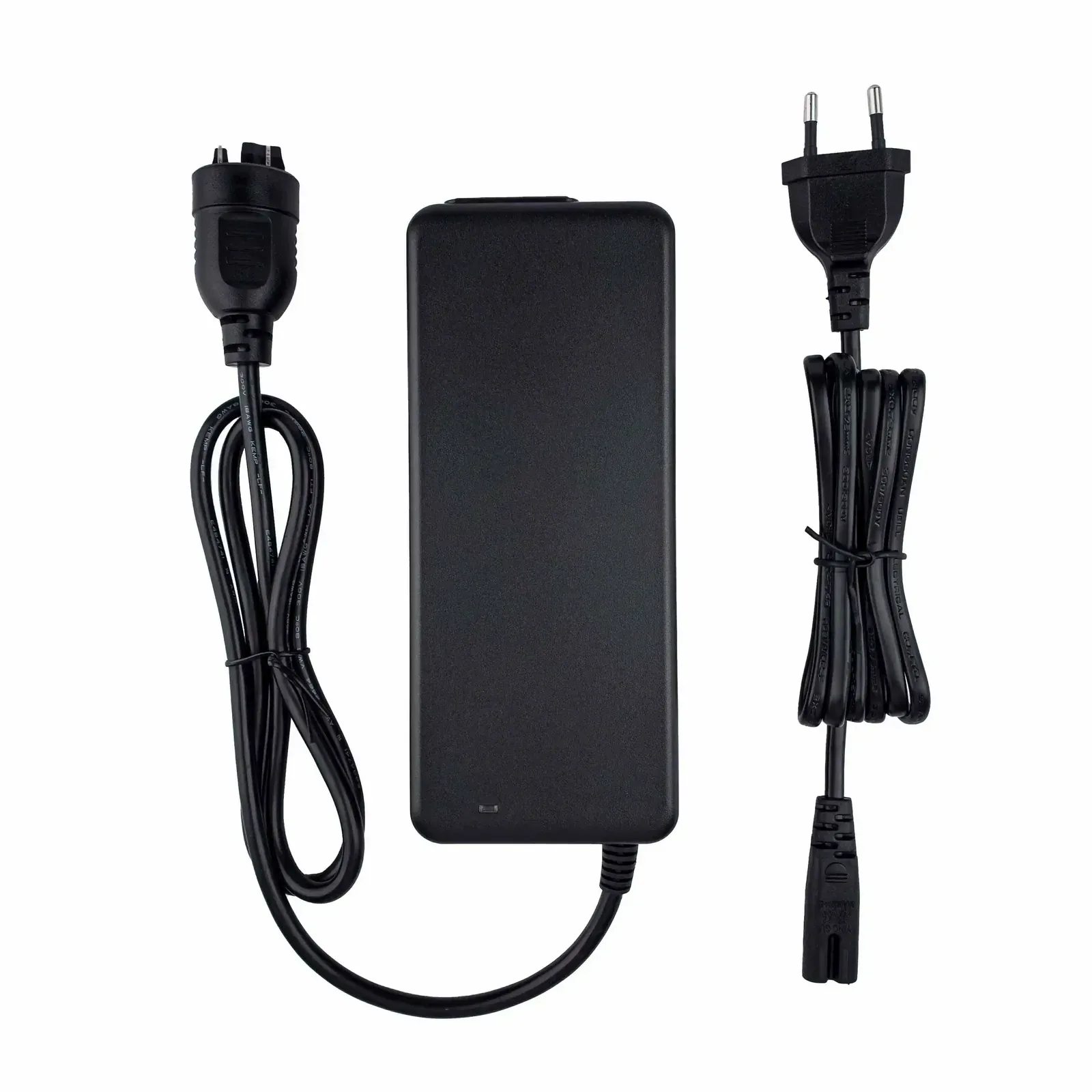
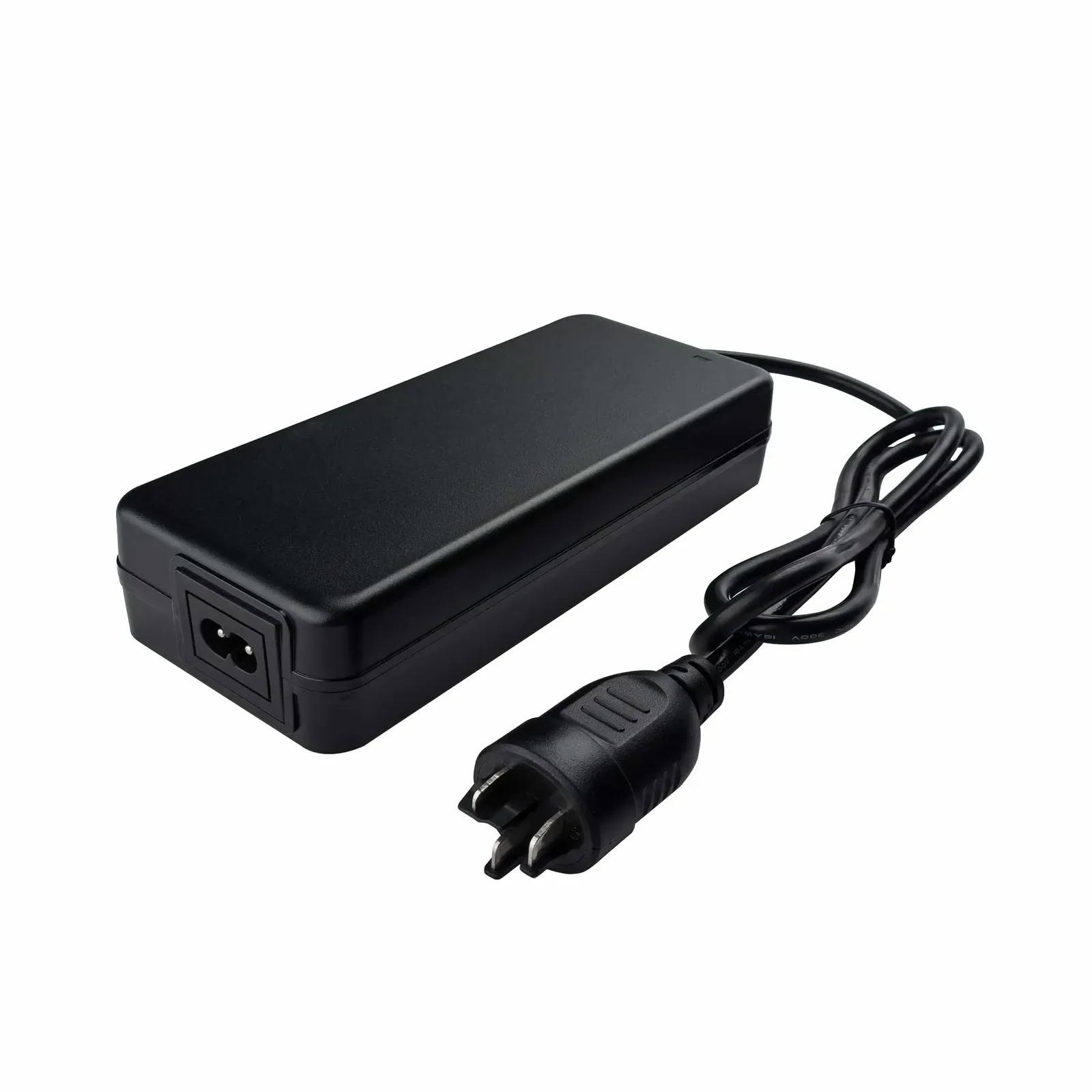
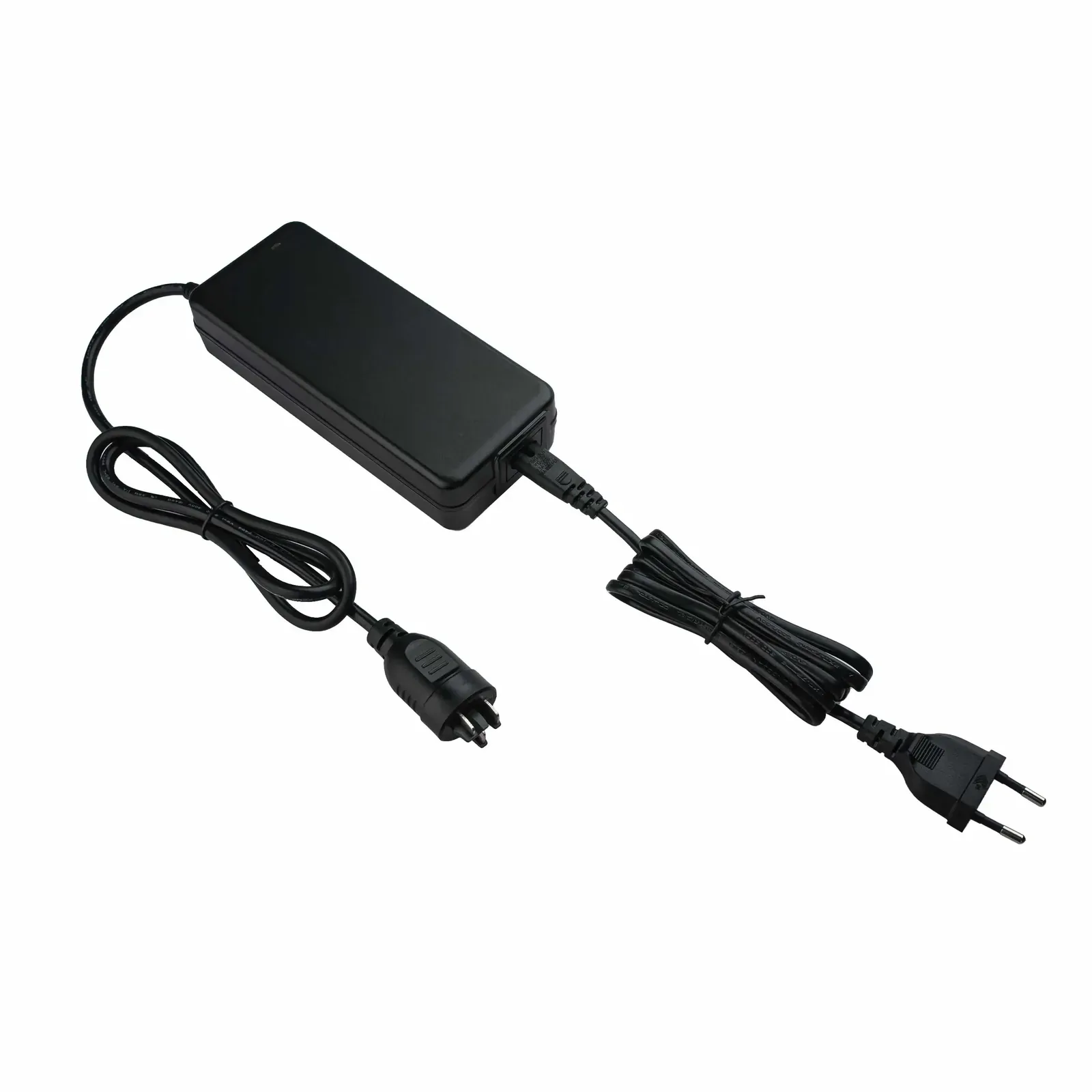
A charger alone cannot sense cell temperature. The protection comes from communication between the battery's BMS and the charger. Juxon's smart LiFePO4 chargers, such as the Juxon010-100A, exchange data with the battery management system over CAN bus or another signal line. When the BMS reports pack temperature at or below the low-temp threshold, it instructs the charger to hold, reduce current, or stop — no plating, no damage.
The table below contrasts a basic charger with a low-temperature-protected smart charger:
| Feature | Basic charger | Low-temp-protected smart charger |
| --- | --- | --- |
| Charges below 0°C | Yes (unsafe) | Disabled by BMS signal |
| BMS communication | None | CAN bus / signal line |
| Lithium plating risk | High in winter | Eliminated |
| Suitable for outdoor / UK-US winter | No | Yes |
| Field configurability | Fixed | Programmable thresholds |
Where Cold-Weather Charging Actually Matters
This is not a theoretical edge case. It shows up in real B2B deployments across the US and UK:
- Outdoor energy storage (ESS) and solar buffers in unheated cabinets.
- AGVs, AMRs, and warehouse robots that move between heated and cold zones.
- Marine, golf cart, and mobility equipment stored in cold sheds over winter.
- Telecom and utility backup deployed in northern climates.
In each case the battery may sit cold and then be plugged in for a top-up — exactly the scenario that triggers plating if the system is unprotected.
Specifying a Low-Temperature LiFePO4 Charger for OEM
When you source chargers for a cold-climate product, look for these capabilities:
- BMS handshake so the charger reacts to pack temperature, not just terminal voltage.
- Programmable low-temp threshold and resume hysteresis matched to your cell datasheet.
- Correct chemistry profile (LiFePO4 CC-CV, not lead-acid or Li-ion).
- Ingress protection (IP65 / IP67) for outdoor enclosures.
- Communication output (CAN bus / RS485) for fleet telemetry.
Our engineering team configures these parameters per cell specification during OEM qualification, so the charger and battery arrive matched. Browse the full Knowledge Center for charging-profile deep dives, or review the Juxon010-100A for a representative smart charger platform.
Discuss Your Cold-Climate Application
If your product operates below freezing, do not rely on a generic charger. Contact our engineering team to discuss low-temperature charge protection, BMS communication, and an OEM specification matched to your LiFePO4 cells. We will review your cell datasheet and recommend a charger configuration that keeps your battery safe through every UK and US winter.
FAQ
Can you charge a LiFePO4 battery below 0°C?
No — standard LiFePO4 cells should not be charged below 0°C (32°F). Doing so causes lithium plating on the anode, permanently reducing capacity and risking internal shorts. Only cells explicitly rated for low-temperature charge may accept a reduced current in the cold.
Why is charging dangerous in the cold but discharging is fine?
Charging forces lithium ions into the graphite anode; at low temperature they plate as metal instead of intercalating. Discharging moves ions the other way and is tolerated down to roughly −20°C, so cold discharging is generally safe while cold charging is not.
How does a charger know the battery is too cold?
The charger does not sense temperature on its own. A low-temperature-protected system relies on the battery's BMS to report pack temperature over a communication line (such as CAN bus) and command the charger to hold, limit current, or stop.
Do I need a special charger for outdoor LiFePO4 systems?
Yes. For any outdoor or unheated installation in the US or UK you should use a smart charger with BMS communication and a low-temp cut-off, rather than a basic charger that would keep pushing current below freezing.
Can lead-acid chargers be used for LiFePO4 in winter?
No. Lead-acid and LiFePO4 require different charge profiles and voltage limits, and a lead-acid charger will not implement the low-temperature charge lockout that LiFePO4 needs. Use a chemistry-specific smart charger.